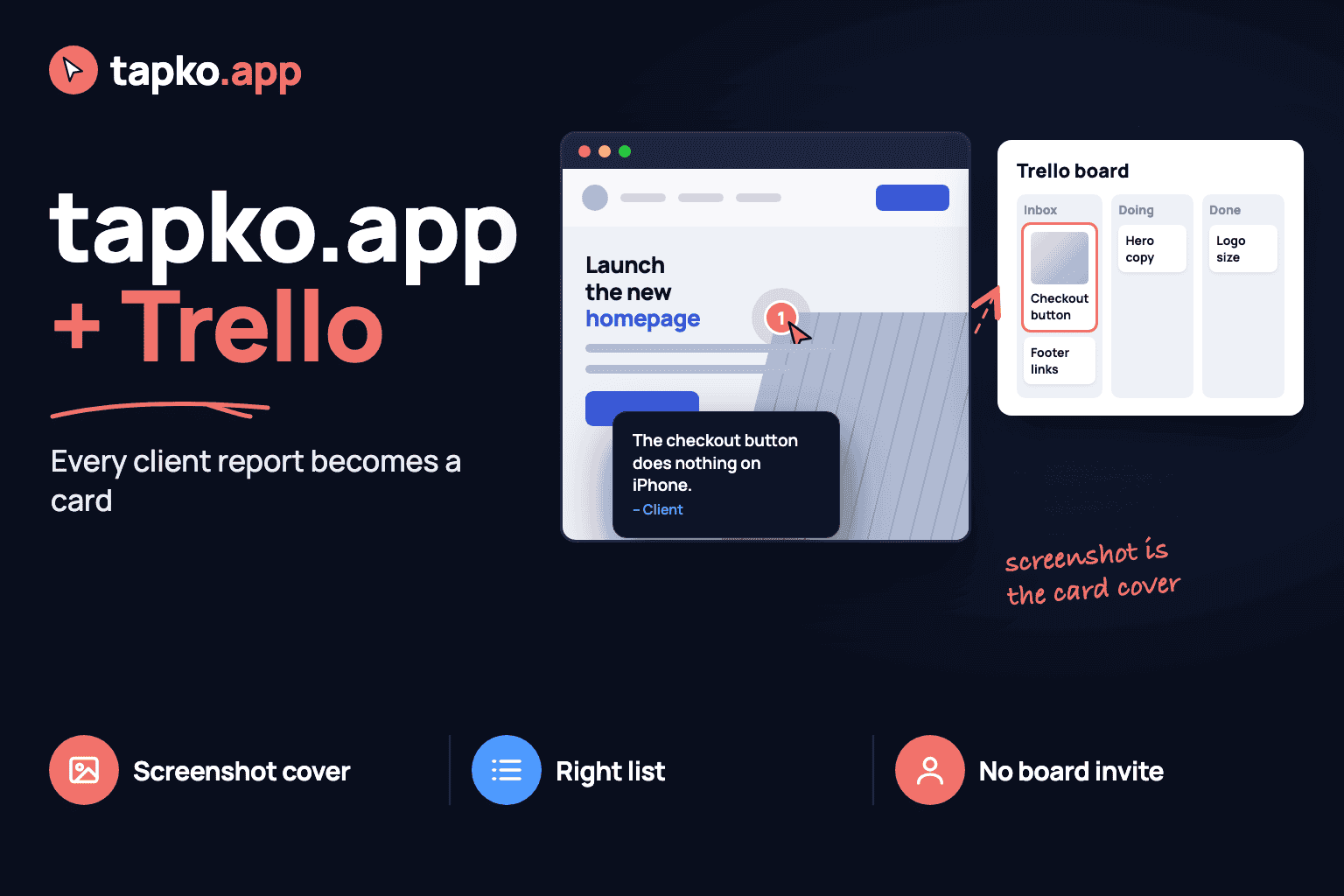
tapko.app + Trello: Client Feedback That Becomes a Card
A client clicks on the broken thing and a card lands on your board, screenshot as the cover, no board invite for the client.

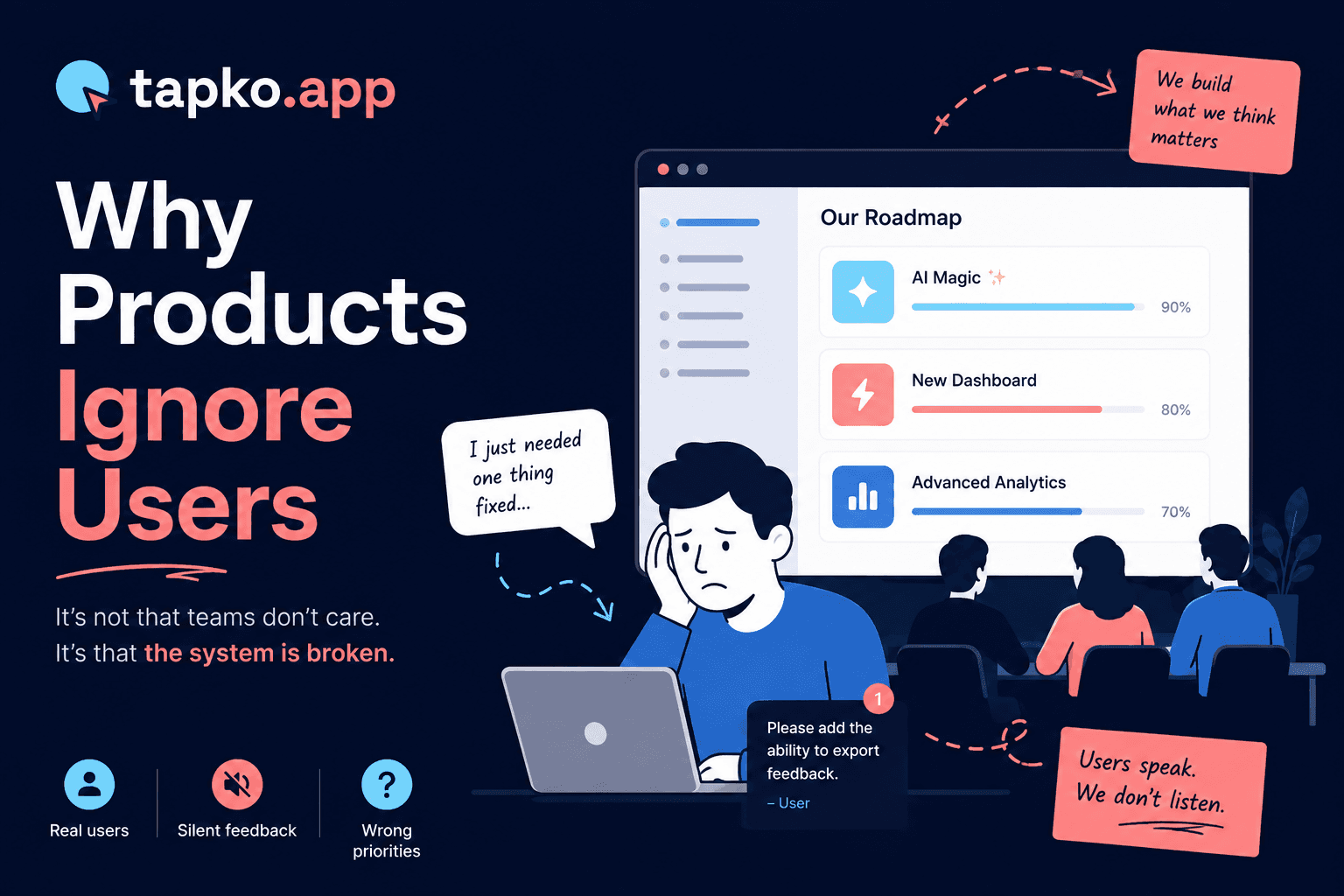
Shipping without structured feedback is guesswork. Here's how tapko.app's embeddable widget closes the loop between what users experience and what your team builds next.
Read ArticleMargin doesn't erode from your worst clients. It erodes from your best ones, the accounts you'd never think to reprice.
Read More: the revenue leak most agency owners can't point toUtilization tracking catches scheduled work. It's blind to the handoffs and context-switches eating your week.
Read More: the hours every agency loses and never bills forA client clicks on the broken thing and a card lands on your board, screenshot as the cover, no board invite for the client.
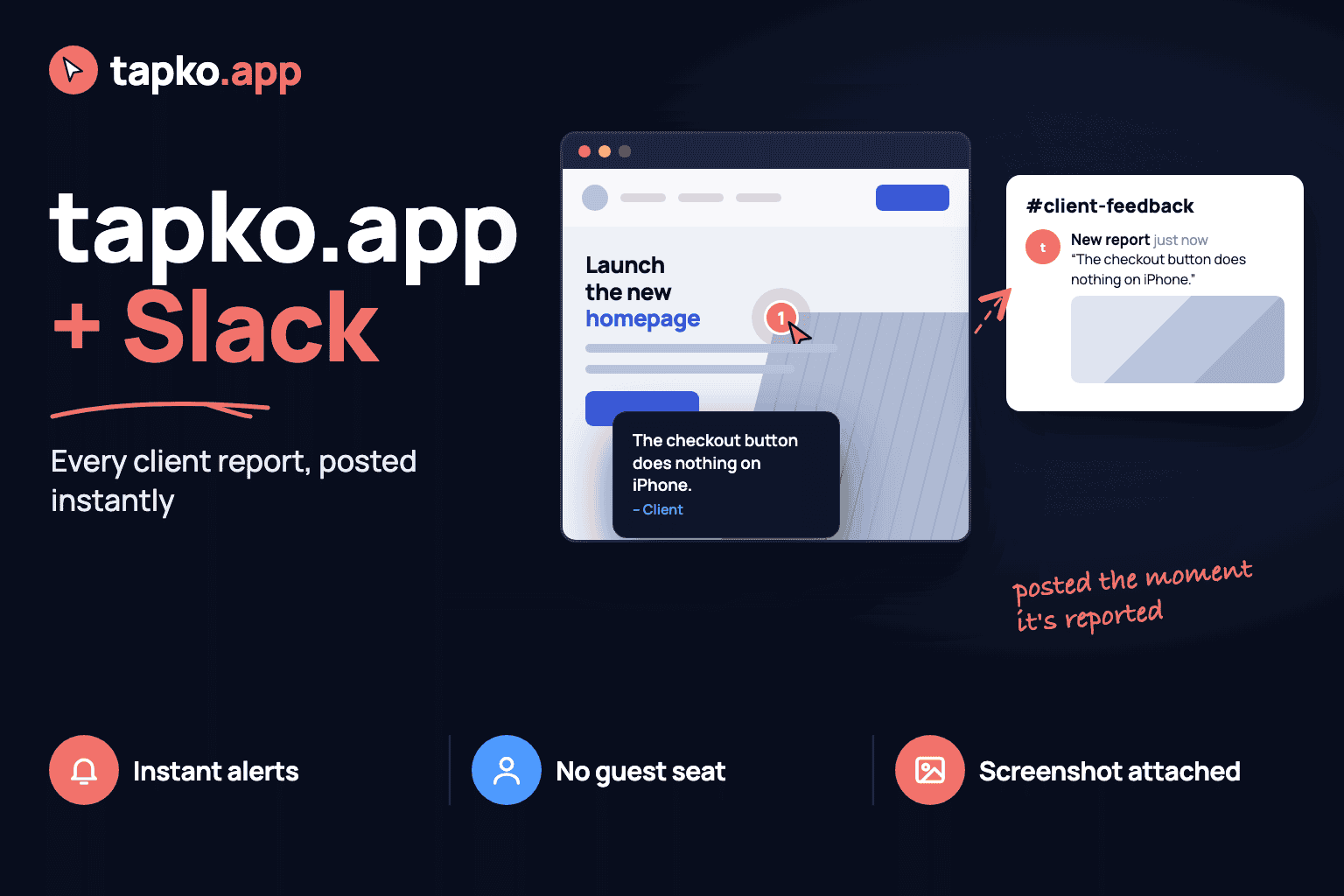
Every client report posts to your Slack channel within seconds of submission, screenshot attached, no guest seat required.
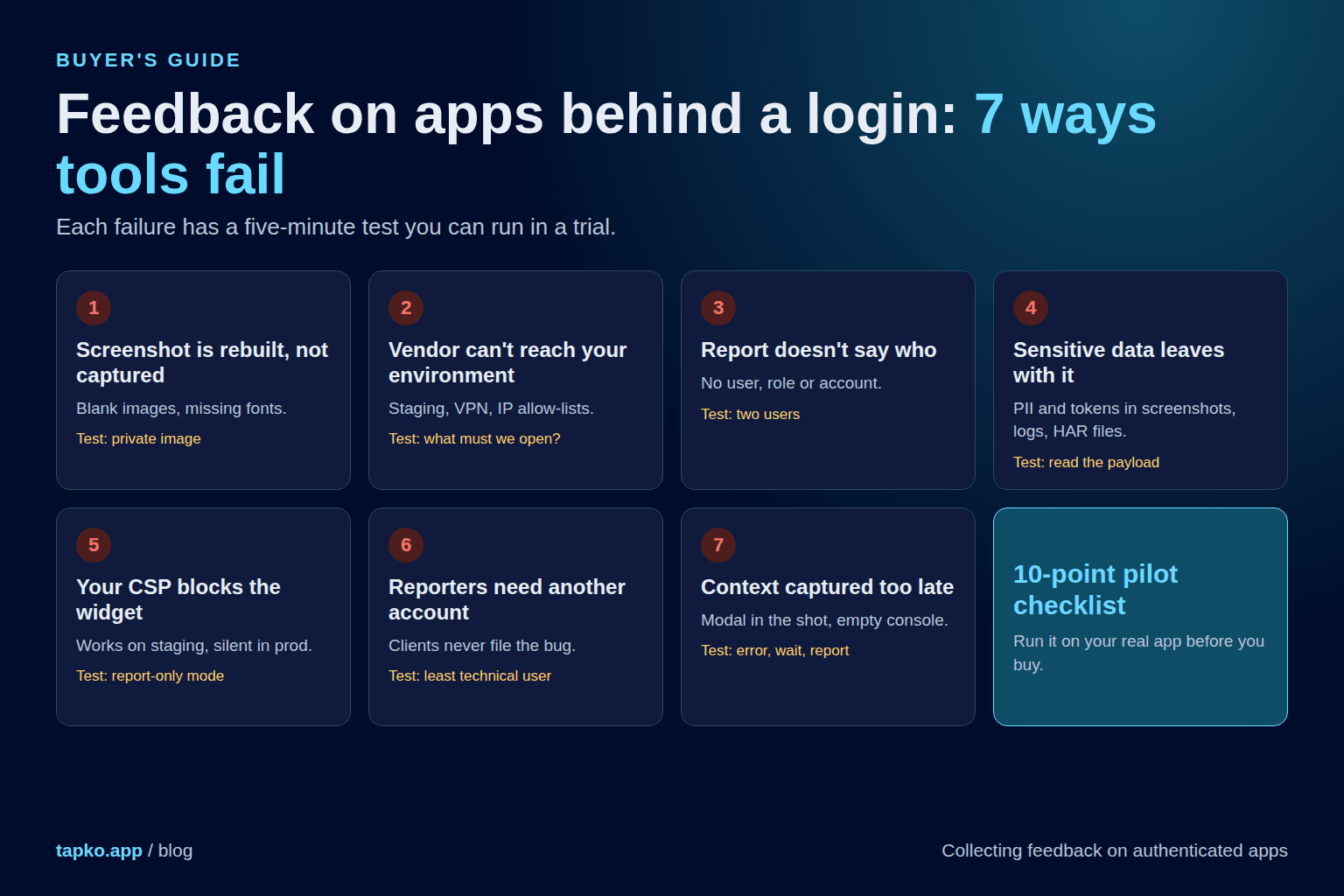
Blank screenshots, anonymous reports, tokens in tickets. Seven ways feedback tools fail behind a login, plus a 10-point checklist for picking one.
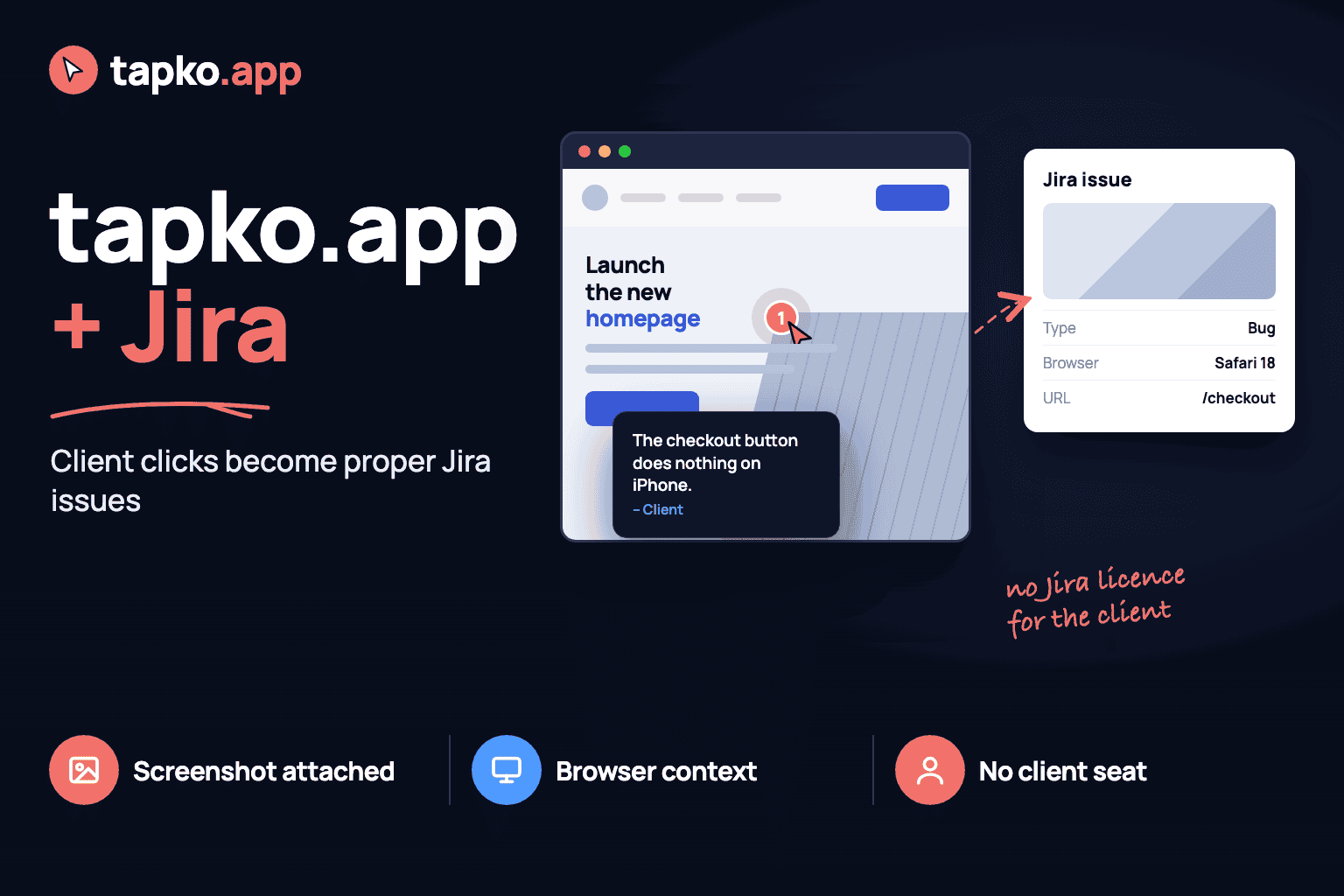
Your client clicks on the broken thing and a formed issue lands on your Jira board, screenshot attached, browser context recorded, and no Jira licence for the client.
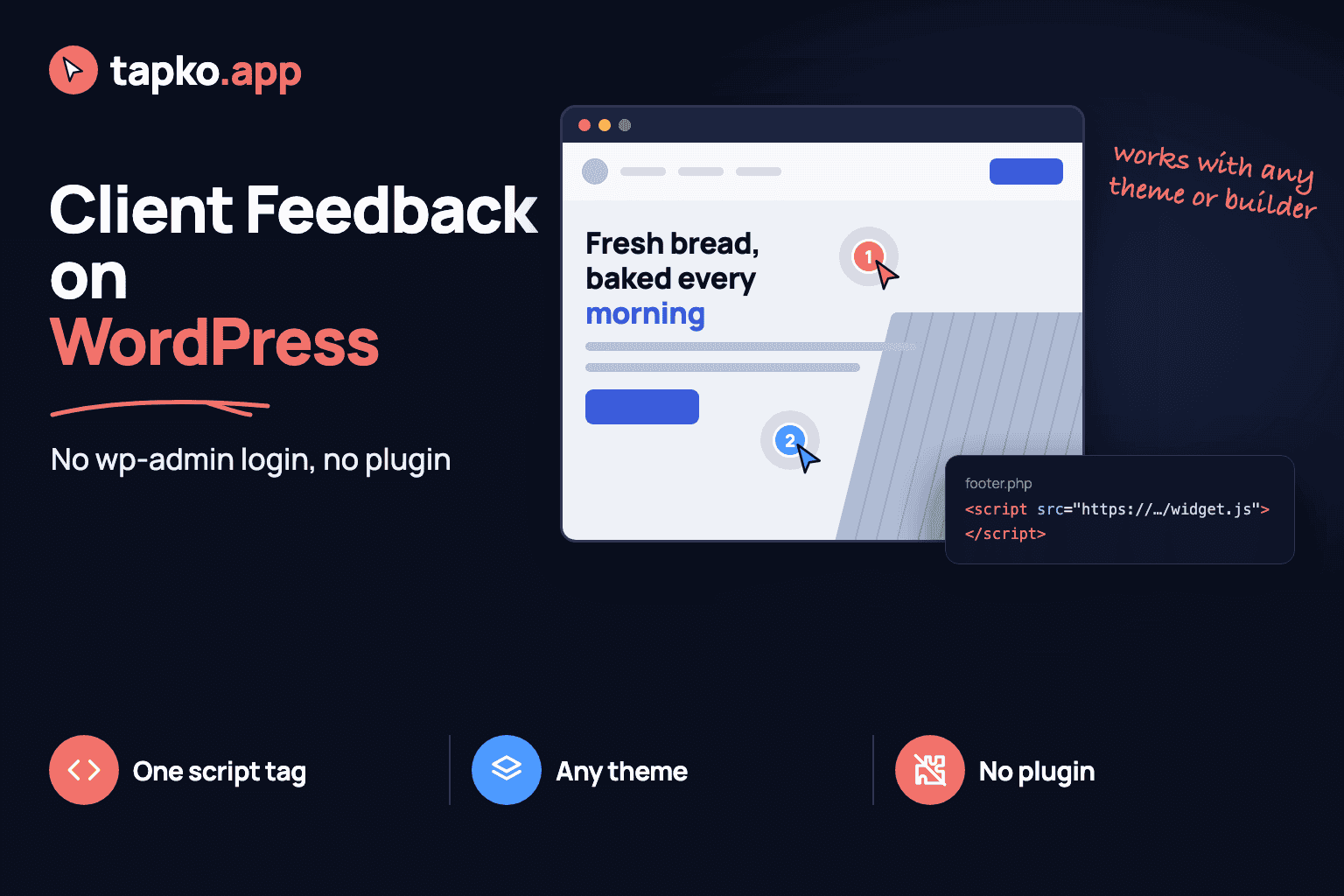
No plugin, no dashboard account for the client. One script tag in the site head, and the WordPress build gets reviewed by clicking on it.
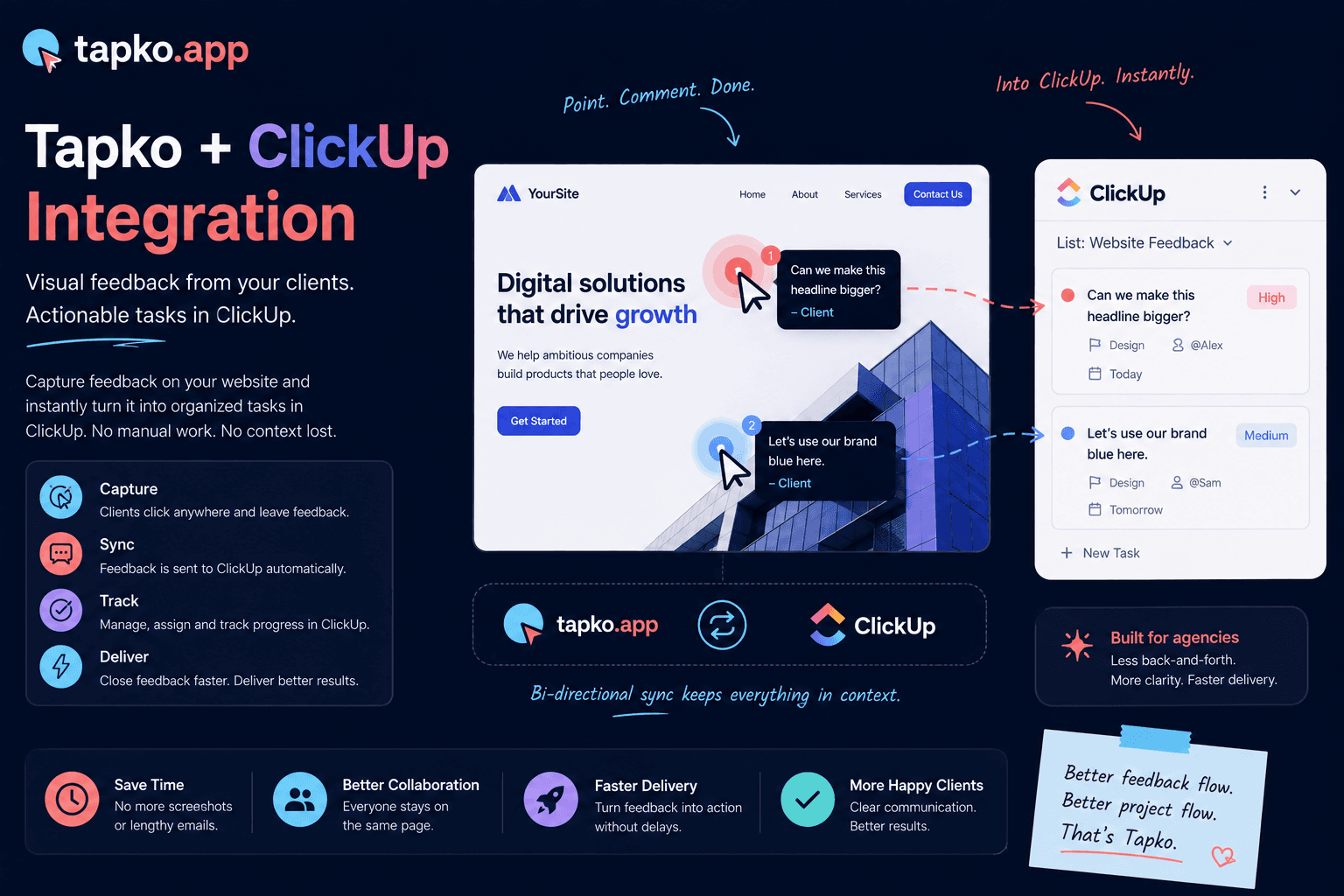
Our ClickUp webhook integration automatically syncs user feedback into your project board, no manual copy-pasting, no lost reports between tools.
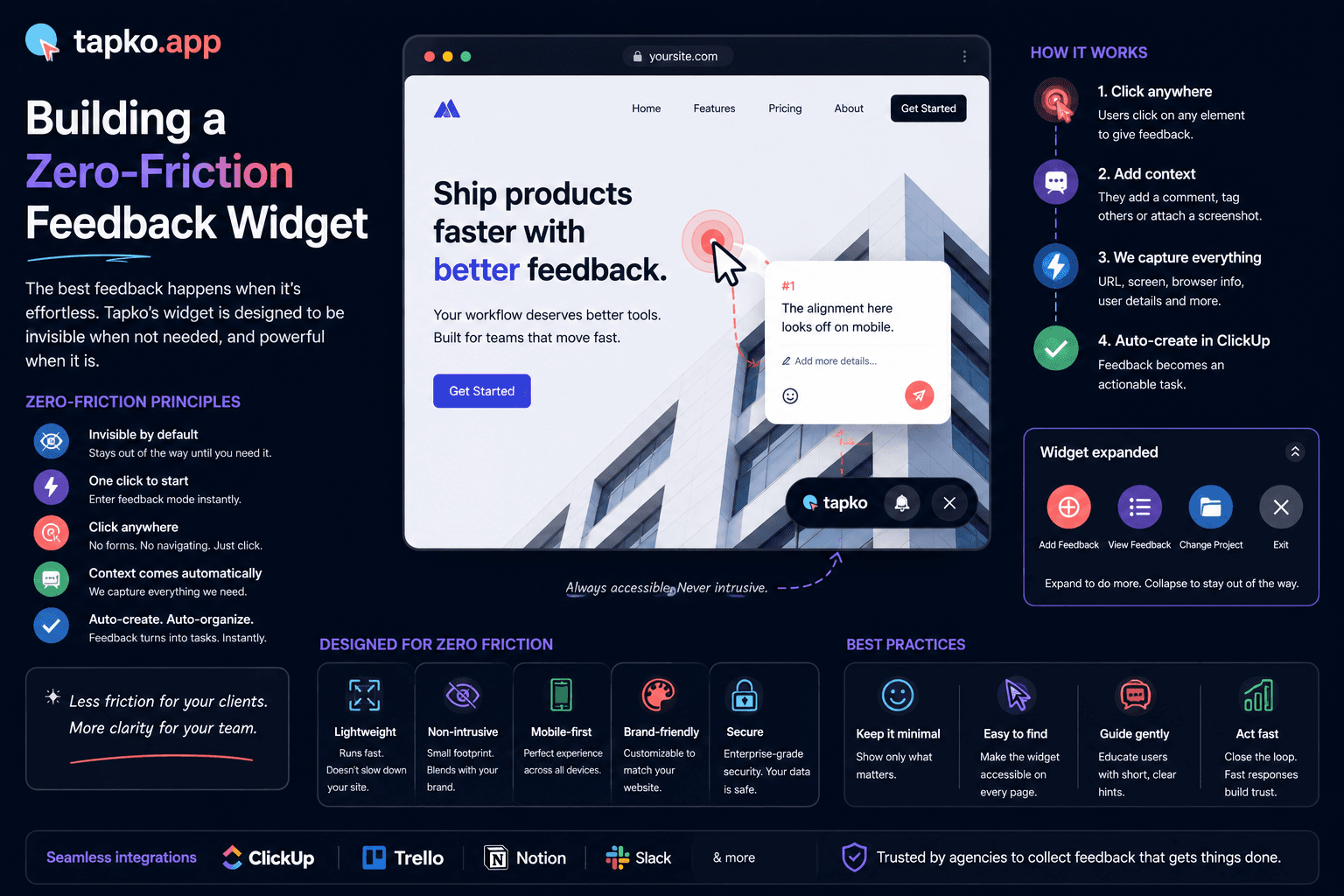
How we engineered the tapko.app CDN widget to stay under 8KB, load asynchronously, and never block your critical rendering path.
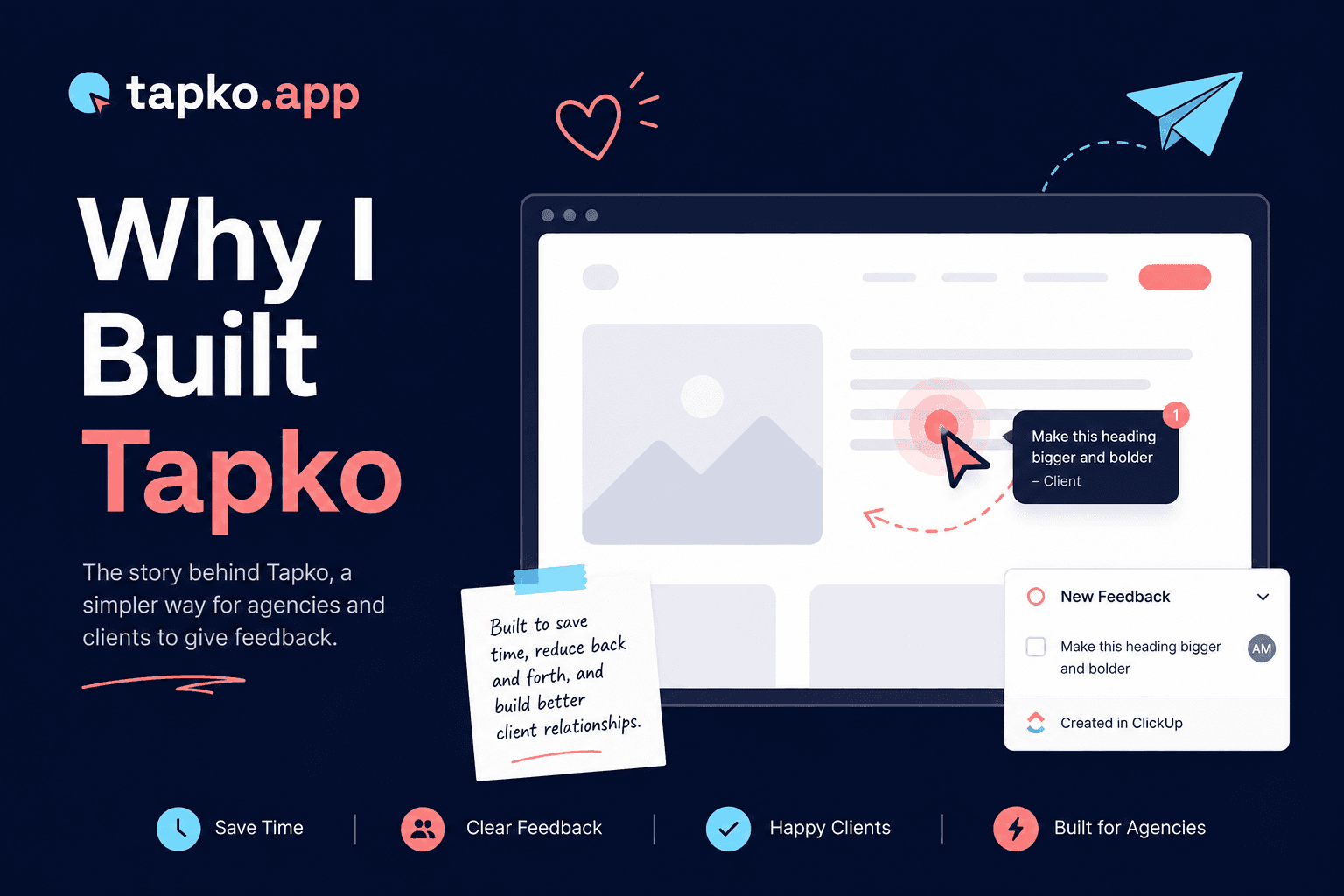
I ran a web agency. I watched every project bleed time to the same broken feedback loop. Here's why I built tapko.app, where it stands today, and what's coming next.
Our ClickUp webhook integration automatically syncs user feedback into your project board, no manual copy-pasting, no lost reports between tools.
How we engineered the tapko.app CDN widget to stay under 8KB, load asynchronously, and never block your critical rendering path.
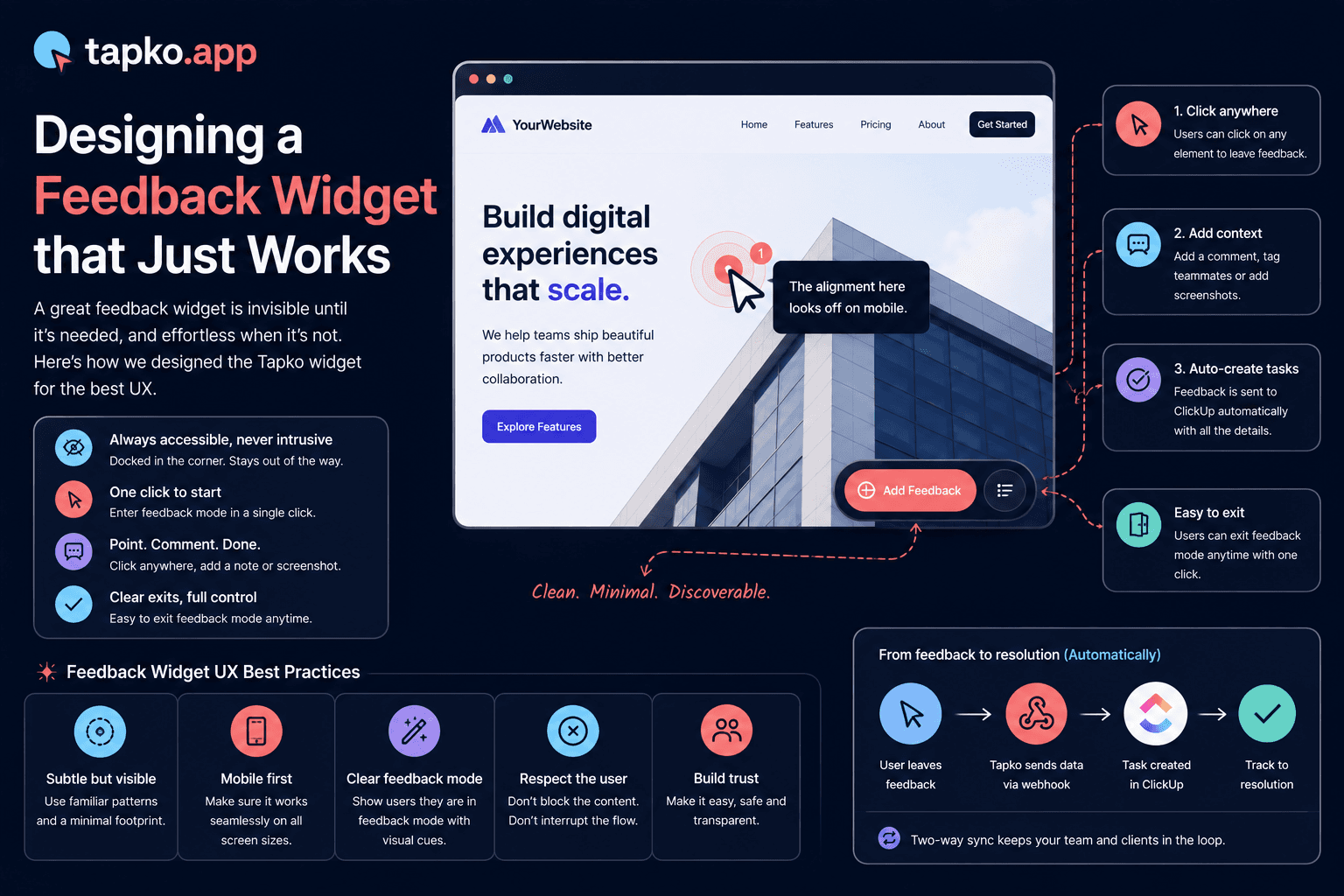
The friction between a user experiencing a bug and reporting it is where most feedback dies. Here's how tapko.app's widget UX was designed to shrink that gap.
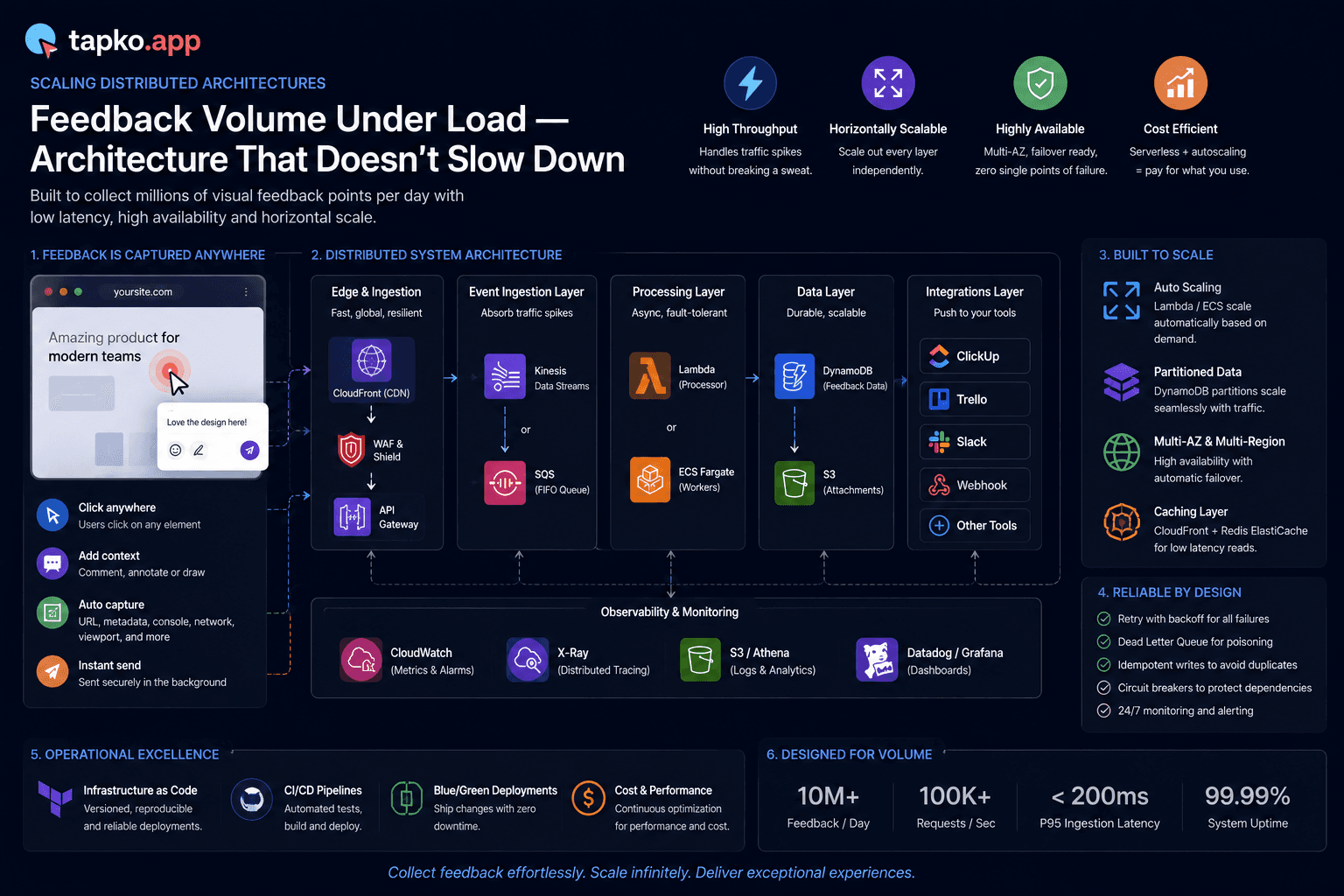
A deep dive into the single-table DynamoDB design that lets tapko.app handle thousands of feedback submissions per project without partition hotspots.
Shipping without structured feedback is expensive guesswork. Here's why the best product teams make user feedback a first-class citizen, and how tapko.app makes that easy.
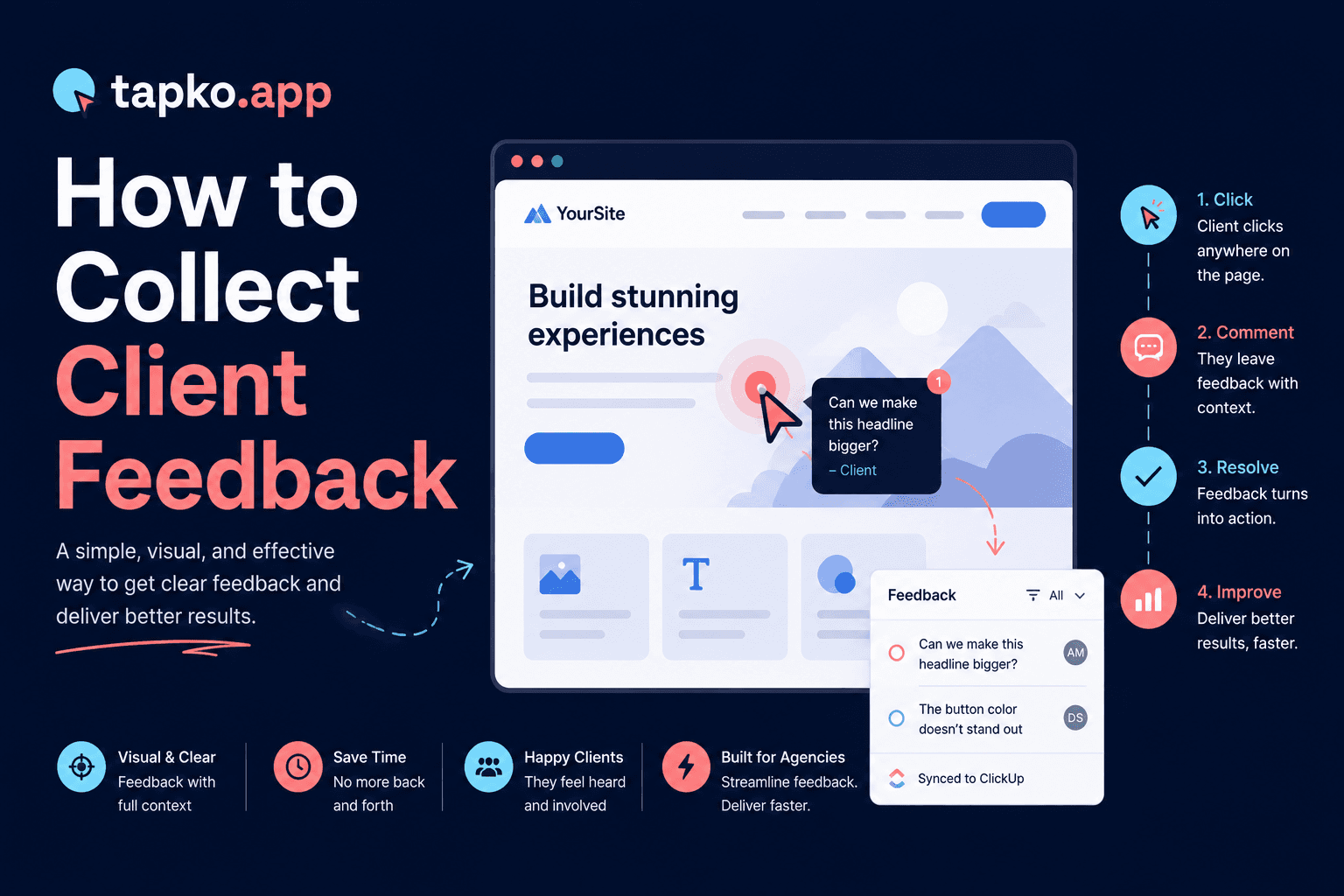
Five methods agencies use to collect client feedback, ranked by how well they actually work. Spoiler: email is last.
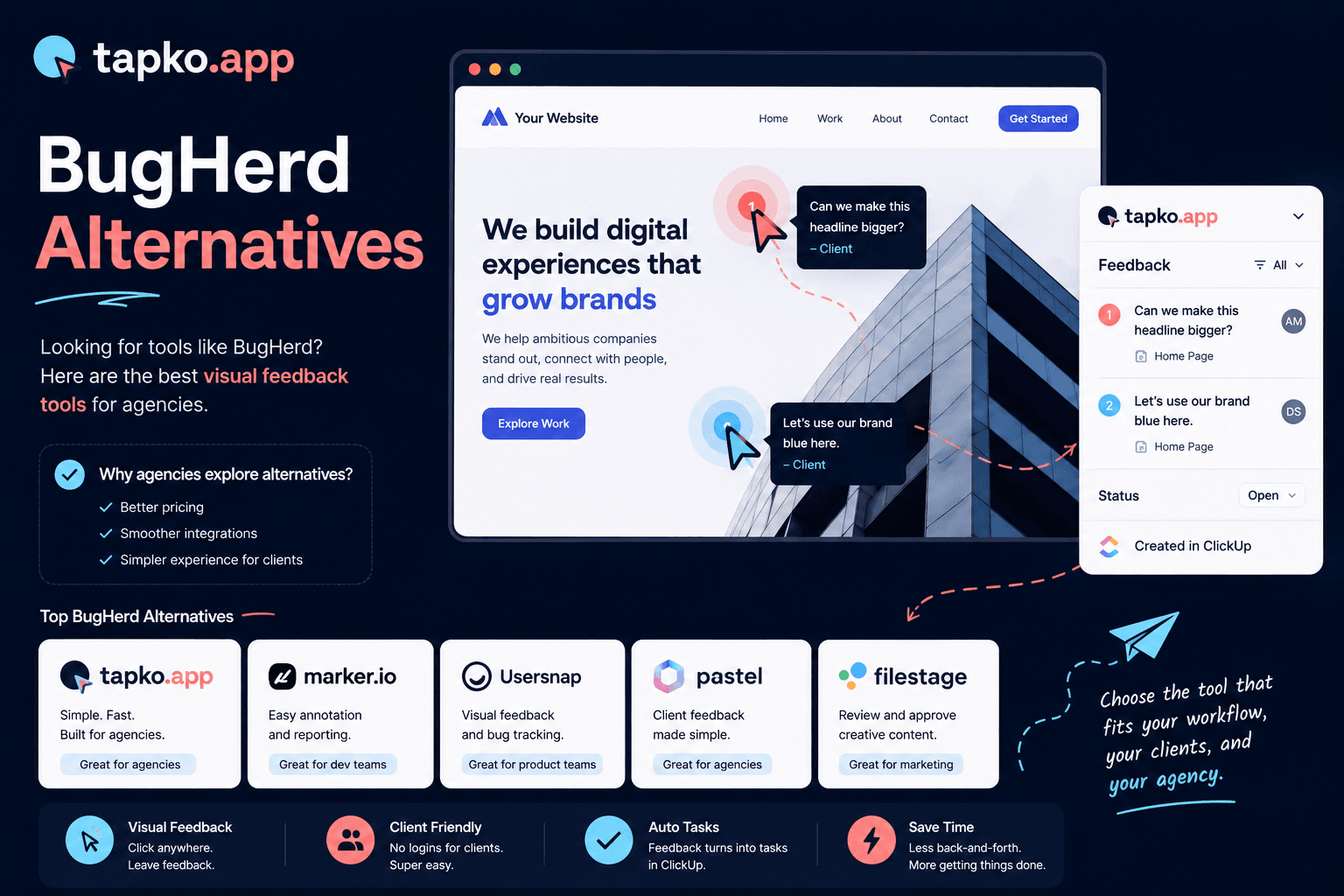
Here are the best affordable BugHerd alternatives for growing agencies that want less client friction.
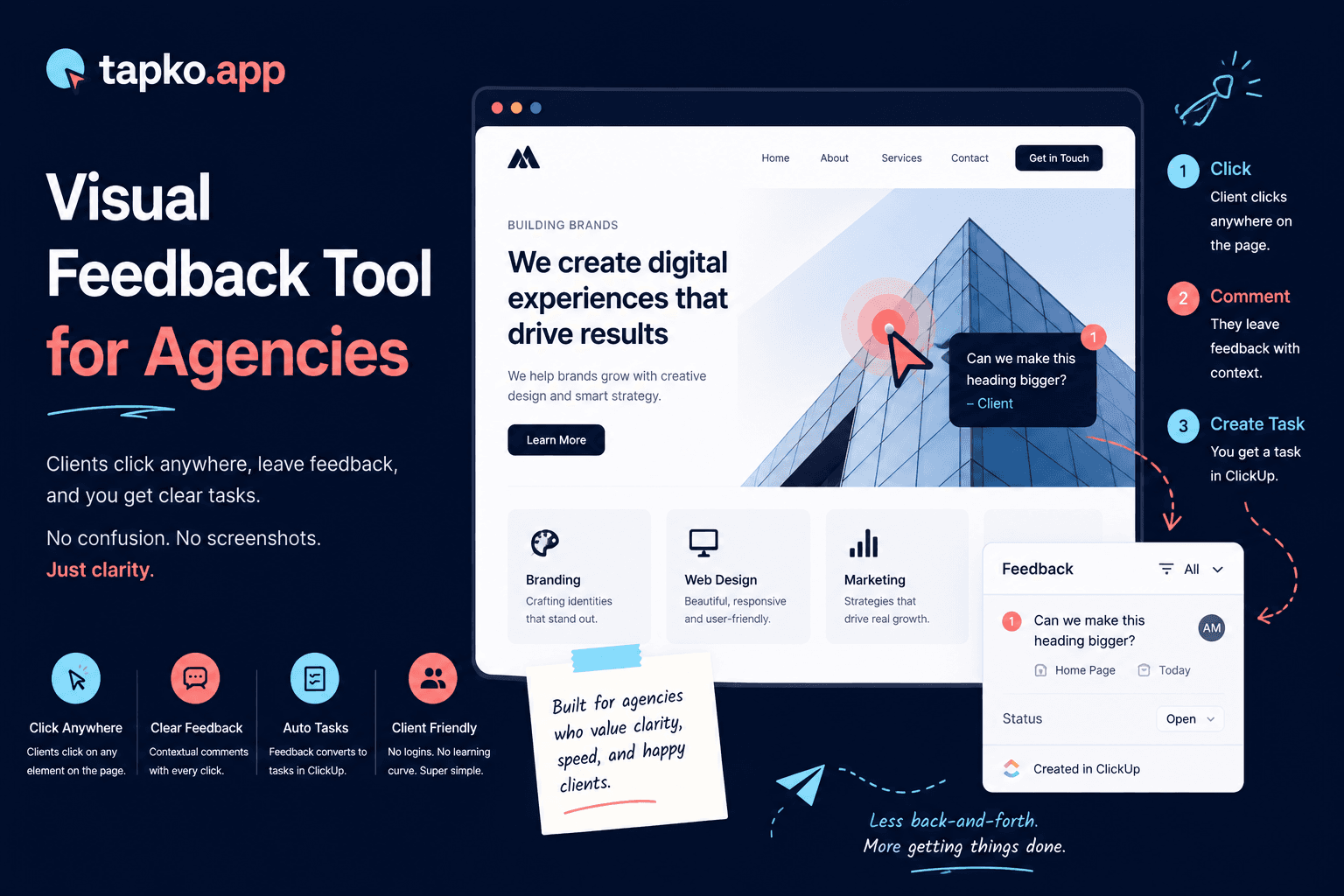
What visual feedback tools actually do, which features matter, and the one thing that separates tools clients use from tools they ignore.
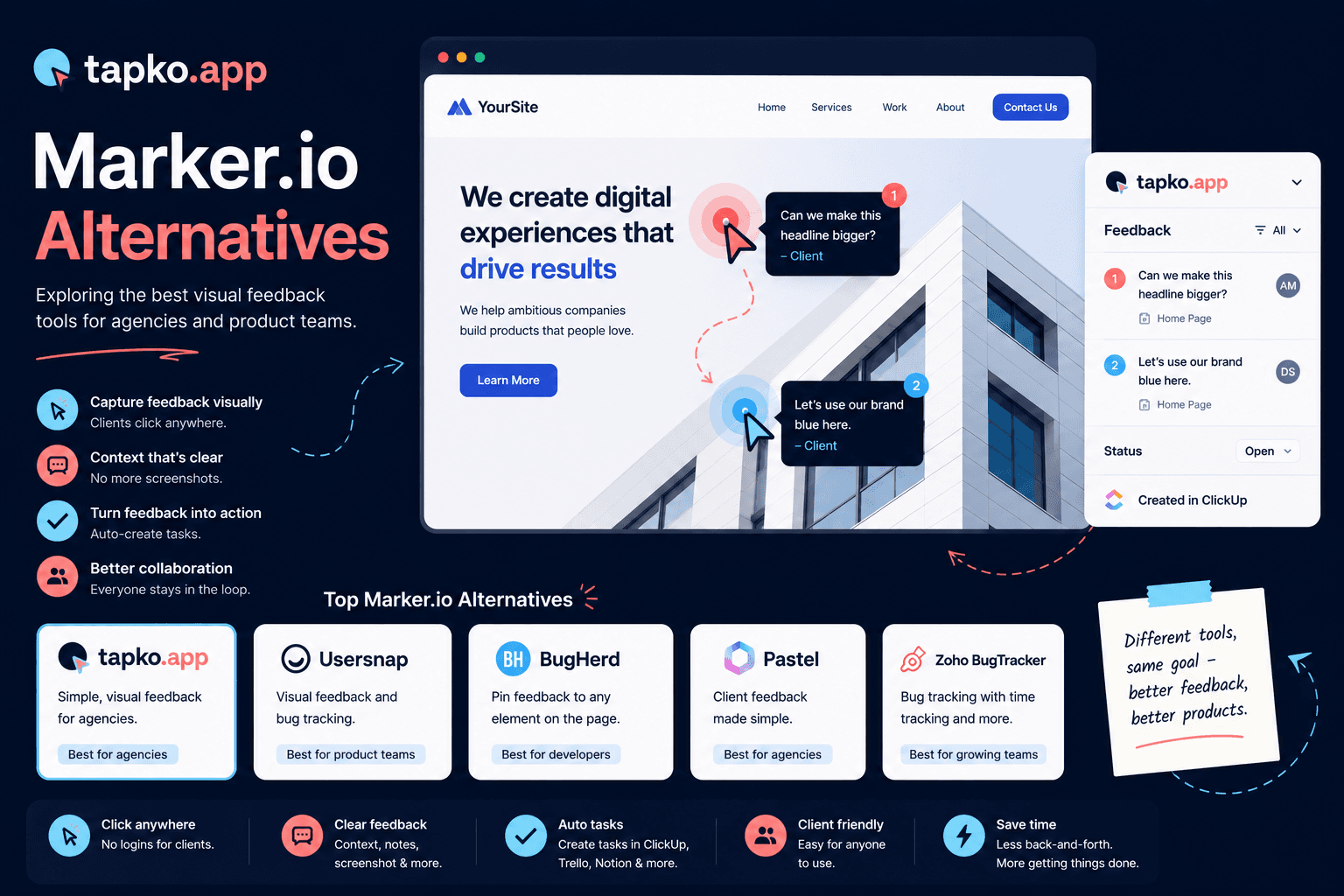
Marker.io is great for dev teams, but heavy for non-technical clients. Here are the best alternatives for agencies that want less client friction.
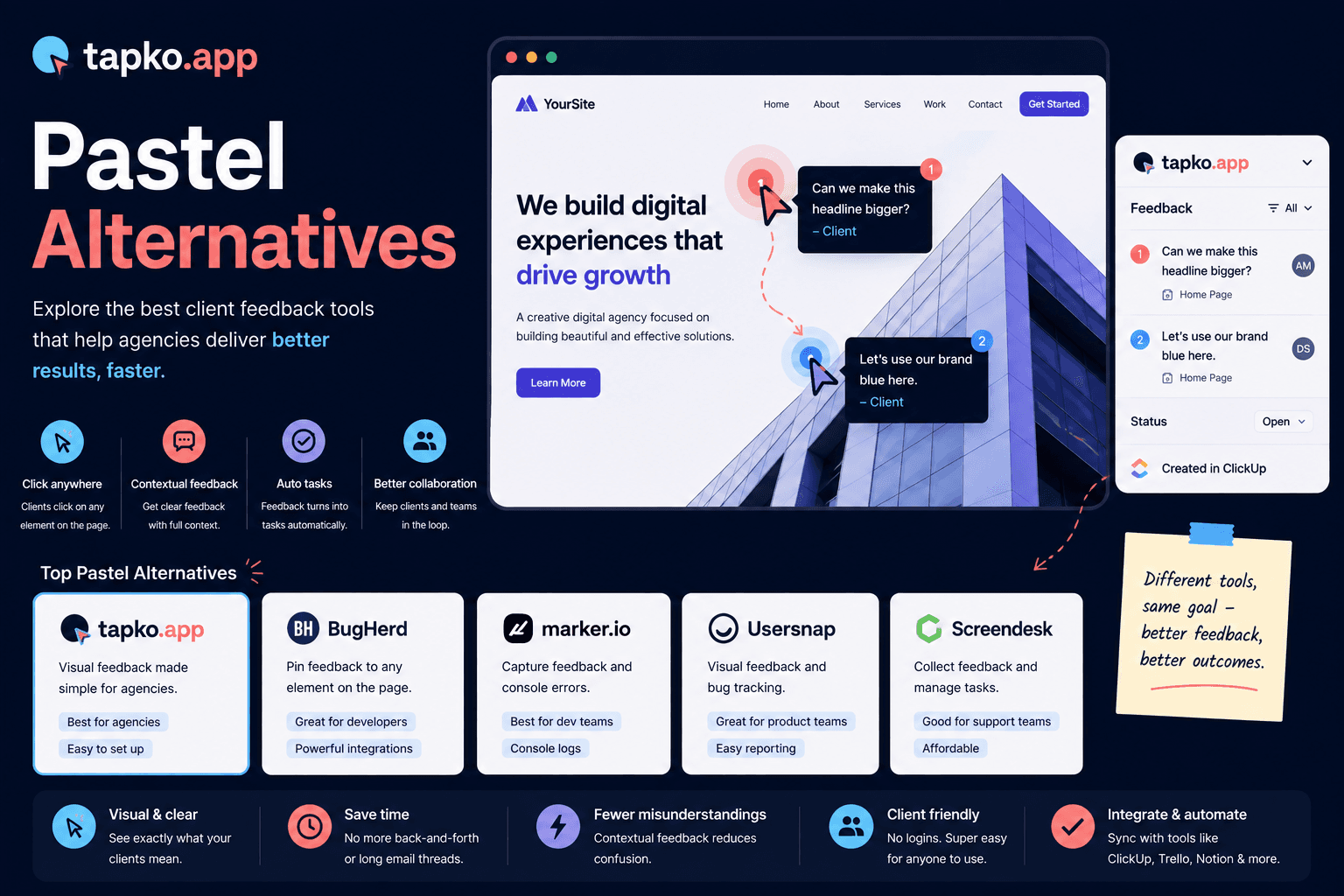
Pastel is great for design review, but agencies running ongoing bug tracking often need more. Here are the best Pastel alternatives.
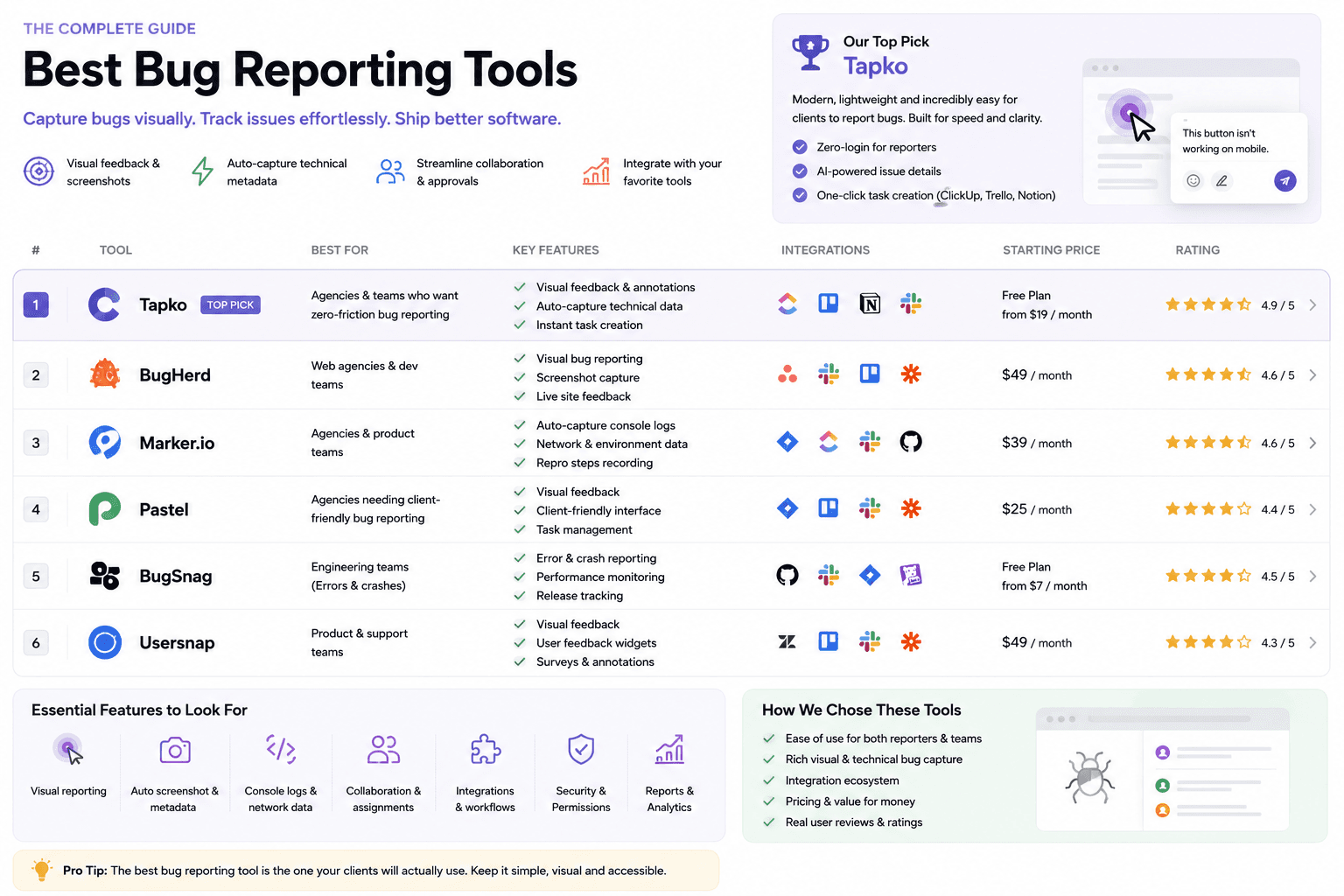
An agency-first guide to the best bug reporting tools, what to look for, and how the top options compare on price and client friction.
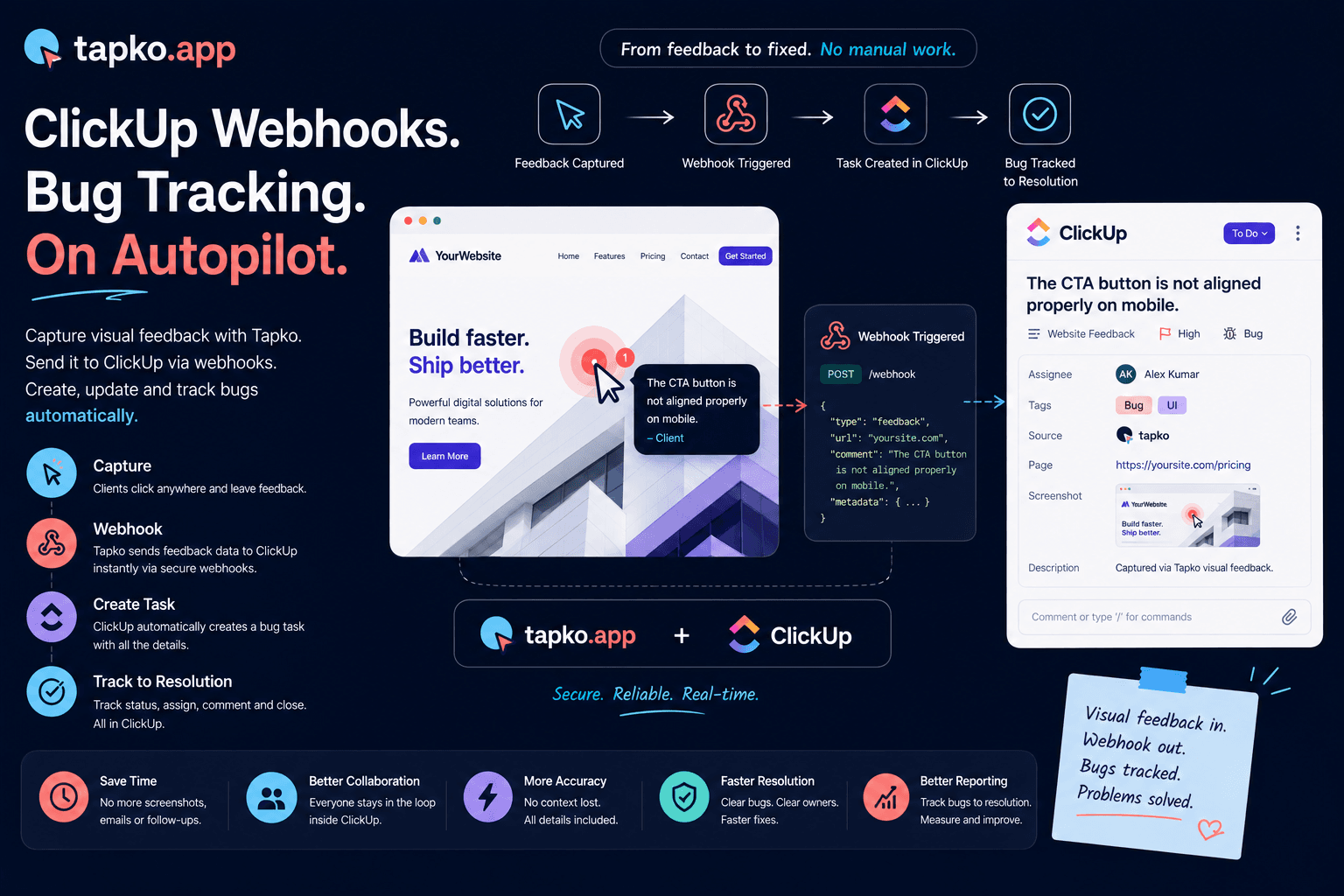
What ClickUp webhooks are, how to set them up, the pitfalls to watch for, and how to turn client bug reports into ClickUp tasks automatically.
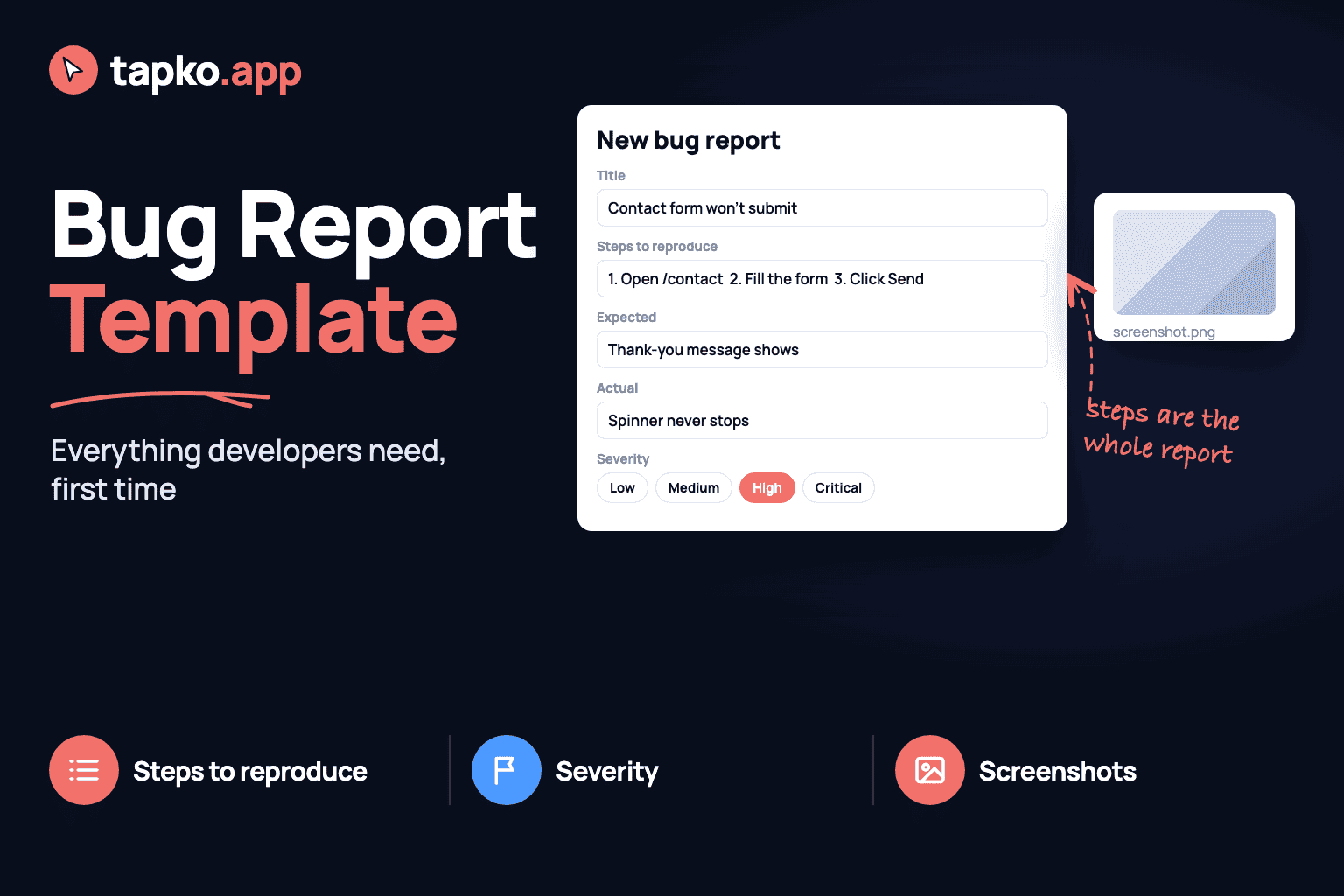
The fields a developer needs to reproduce a bug the first time, as a template you can paste into any tracker, plus a severity scale that means the same thing to everyone.
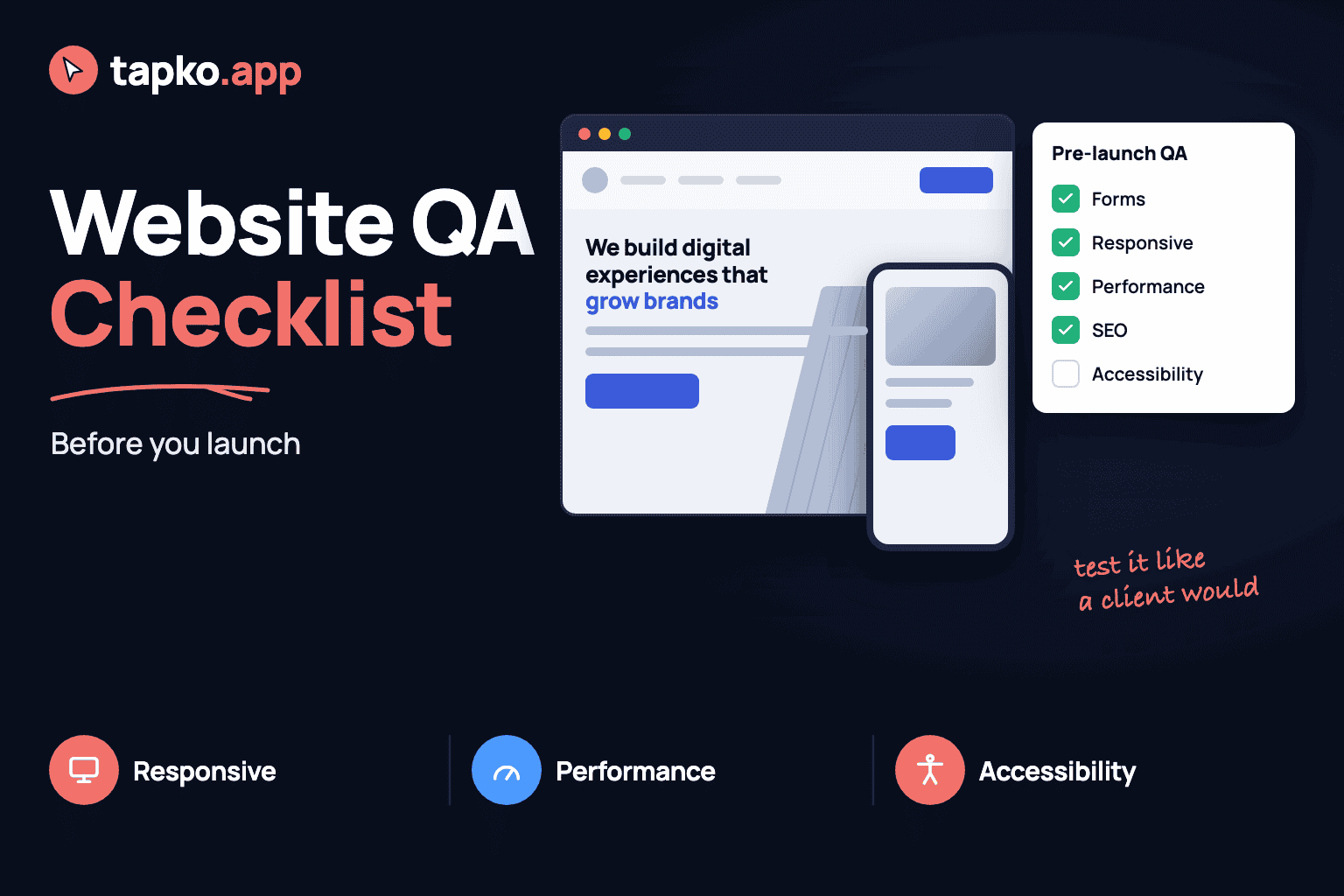
Nine sections, functionality, responsive, content, forms, performance, SEO, accessibility, analytics and the post-launch sweep, as a pass-or-fail list you can copy into your tracker.
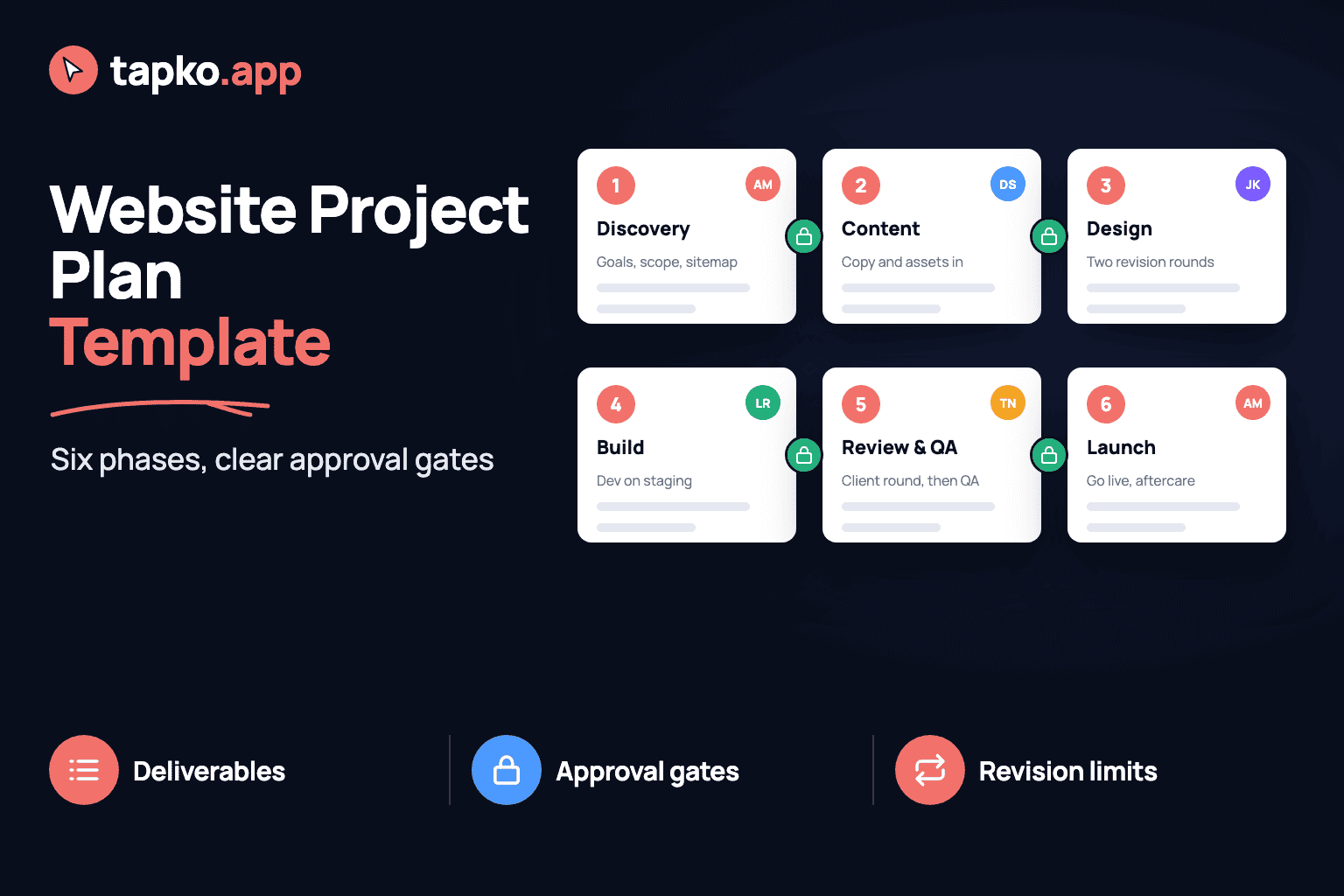
Six phases with deliverables, owners and approval gates, plus the change-control wording that keeps a build from drifting once revisions start.
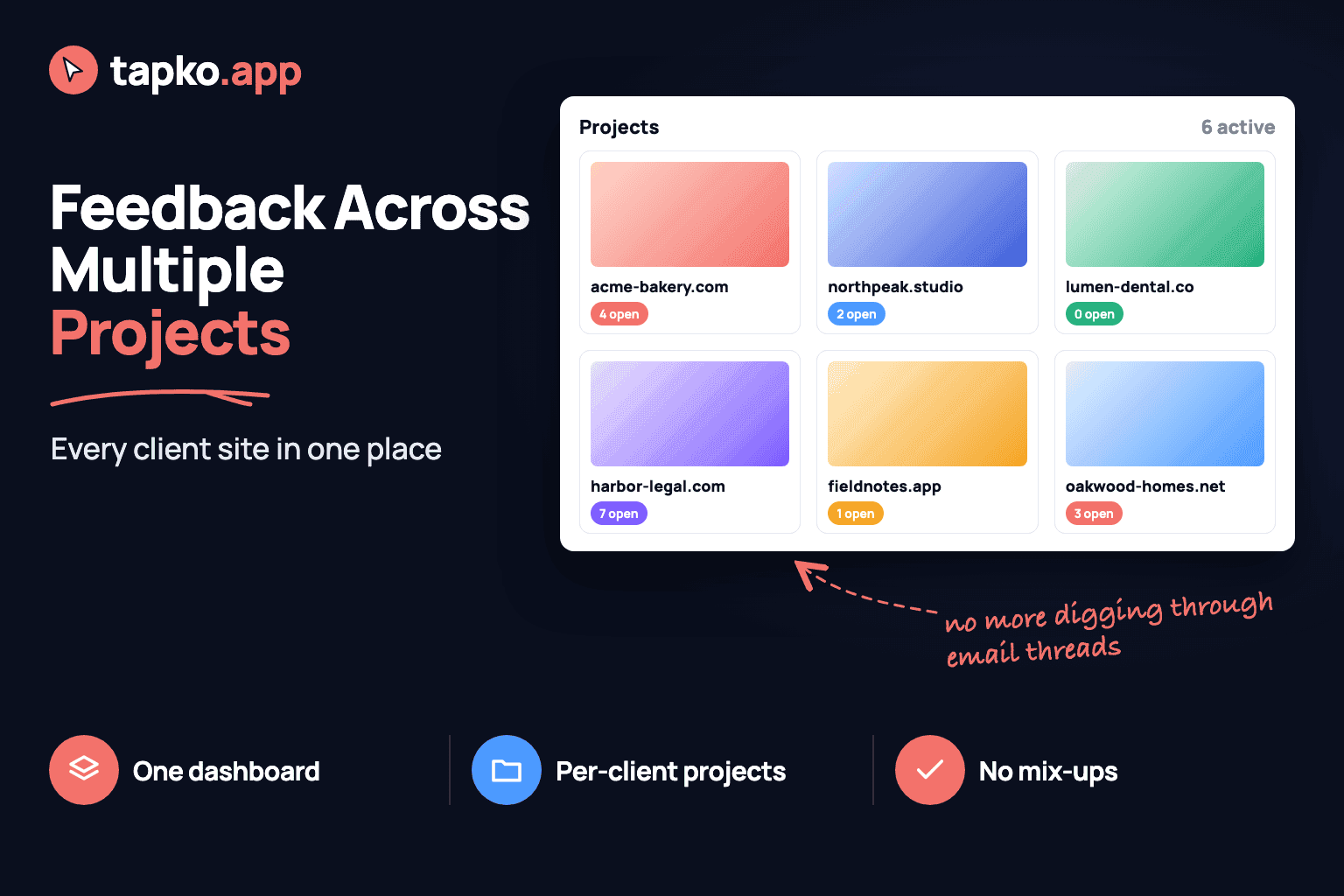
Running feedback for five, ten, or thirty client sites at once breaks email and spreadsheets fast. Here is how to keep every project's feedback separated without it blurring together.
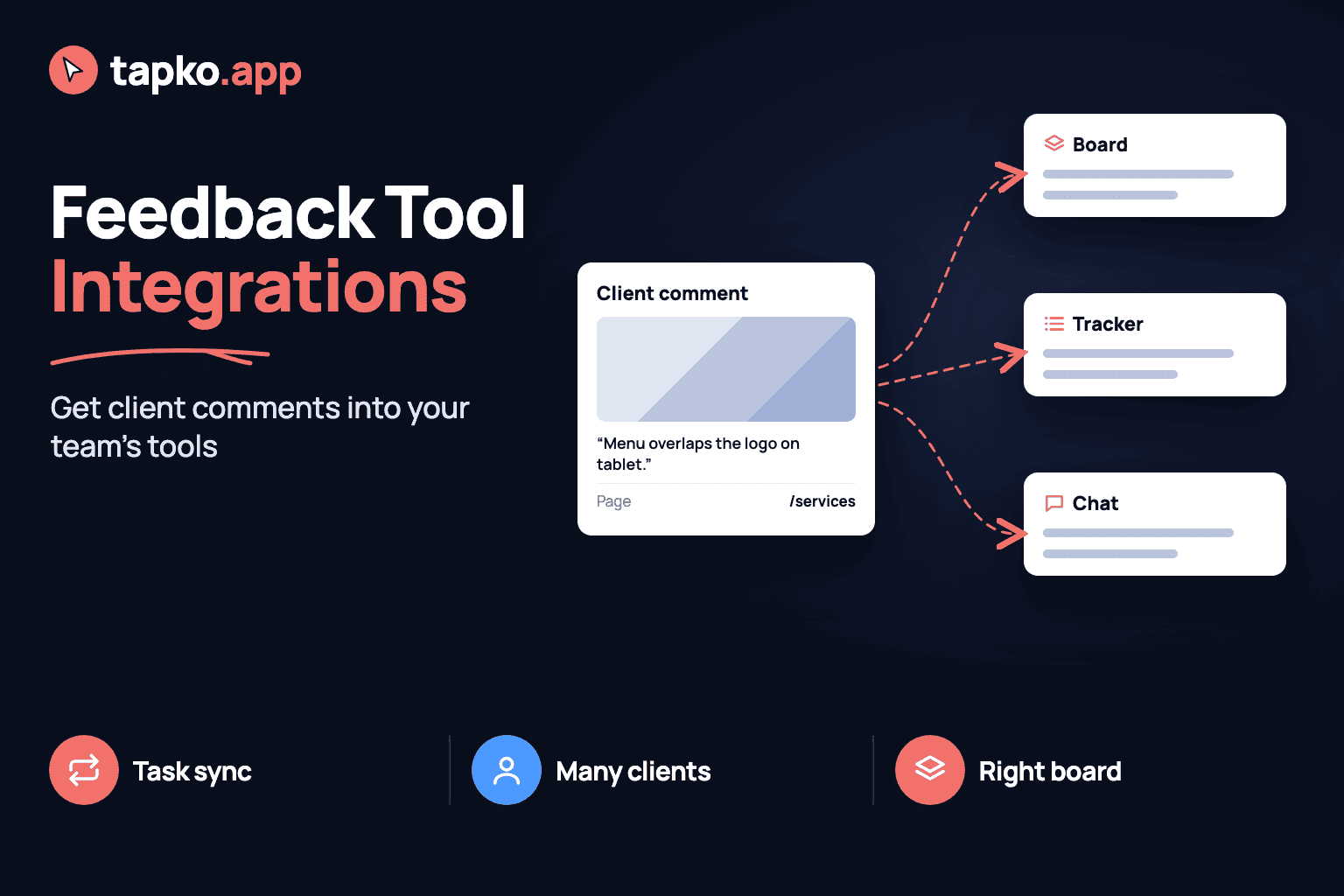
A client comment is only useful once it reaches the tool your team actually works in. What to check before picking a website feedback platform.
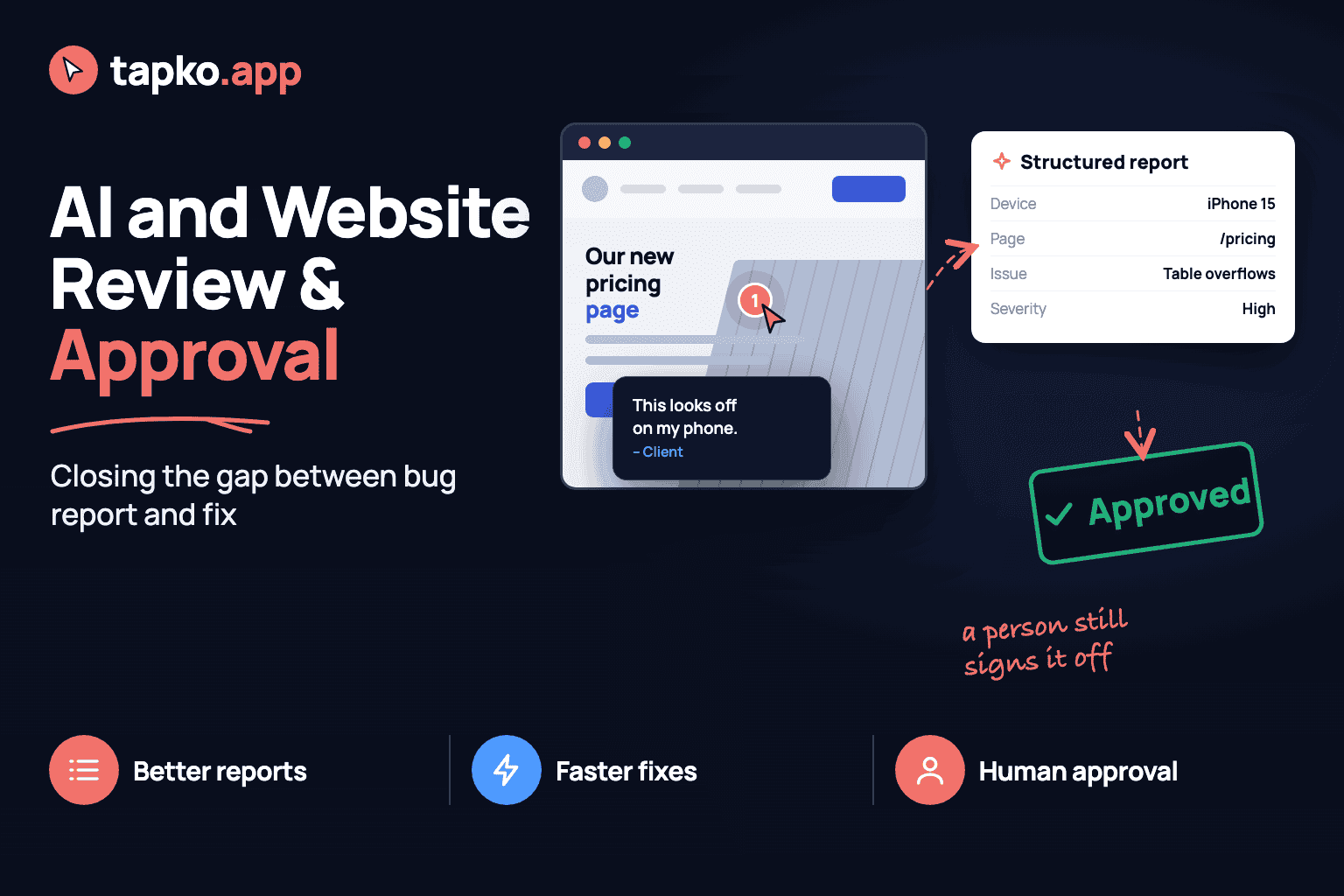
AI is not replacing the client review step. It is closing the gap between a client reporting a bug and a developer fixing it.
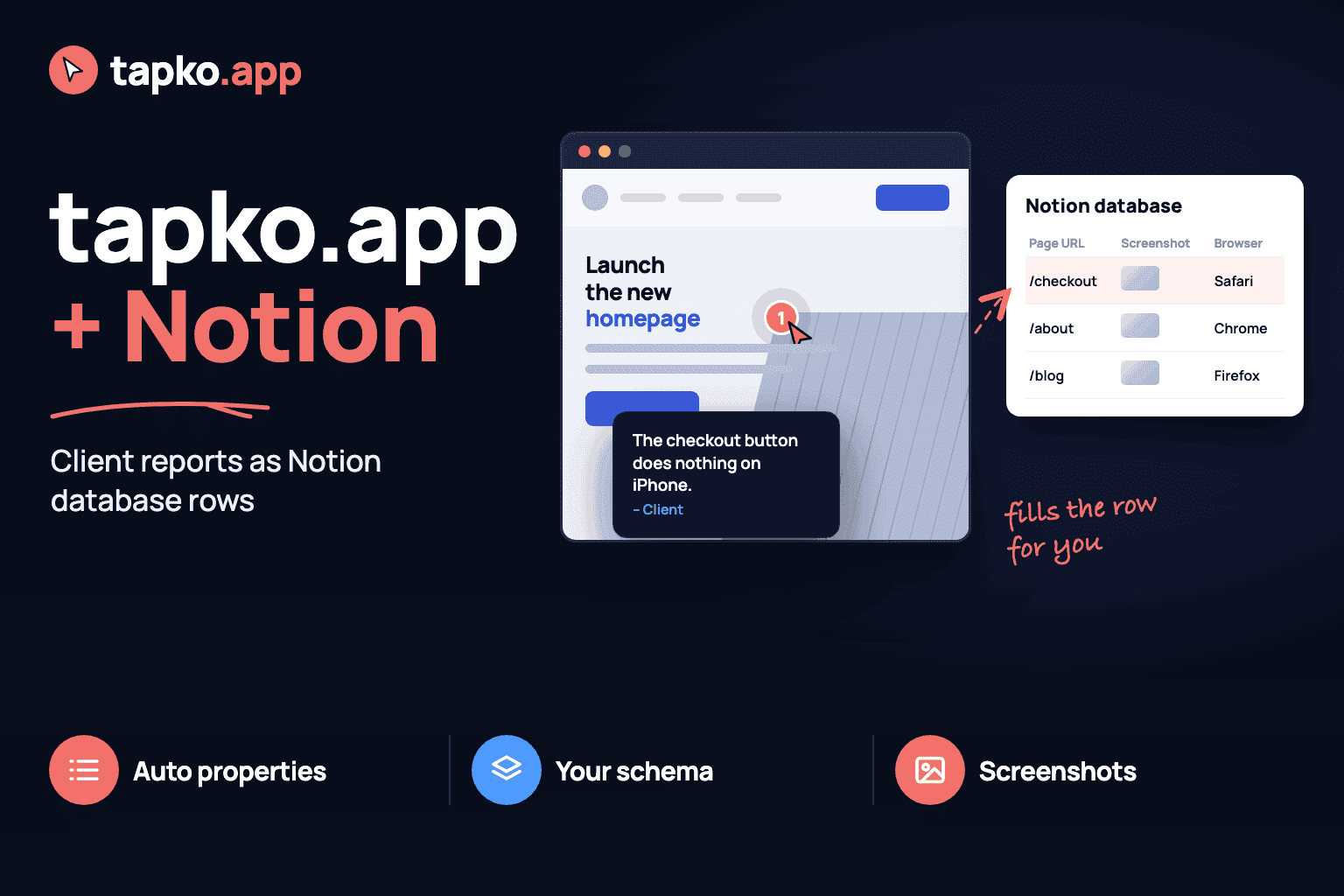
Every client report becomes a row in your Notion database automatically, screenshot, page URL and browser context filled in as properties.
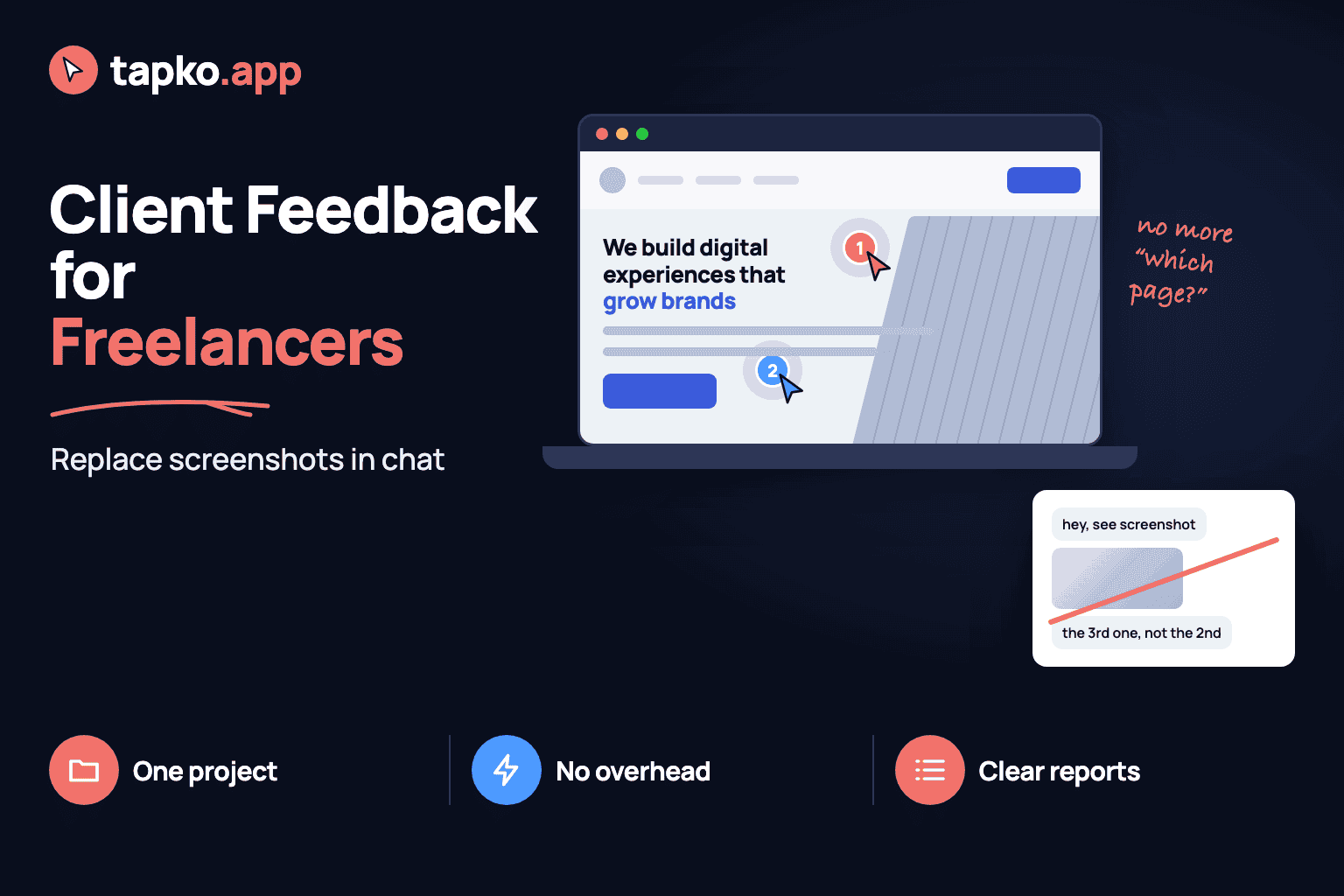
No project manager to chase down details. Here is how solo freelancers get structured bug reports without agency-sized overhead.
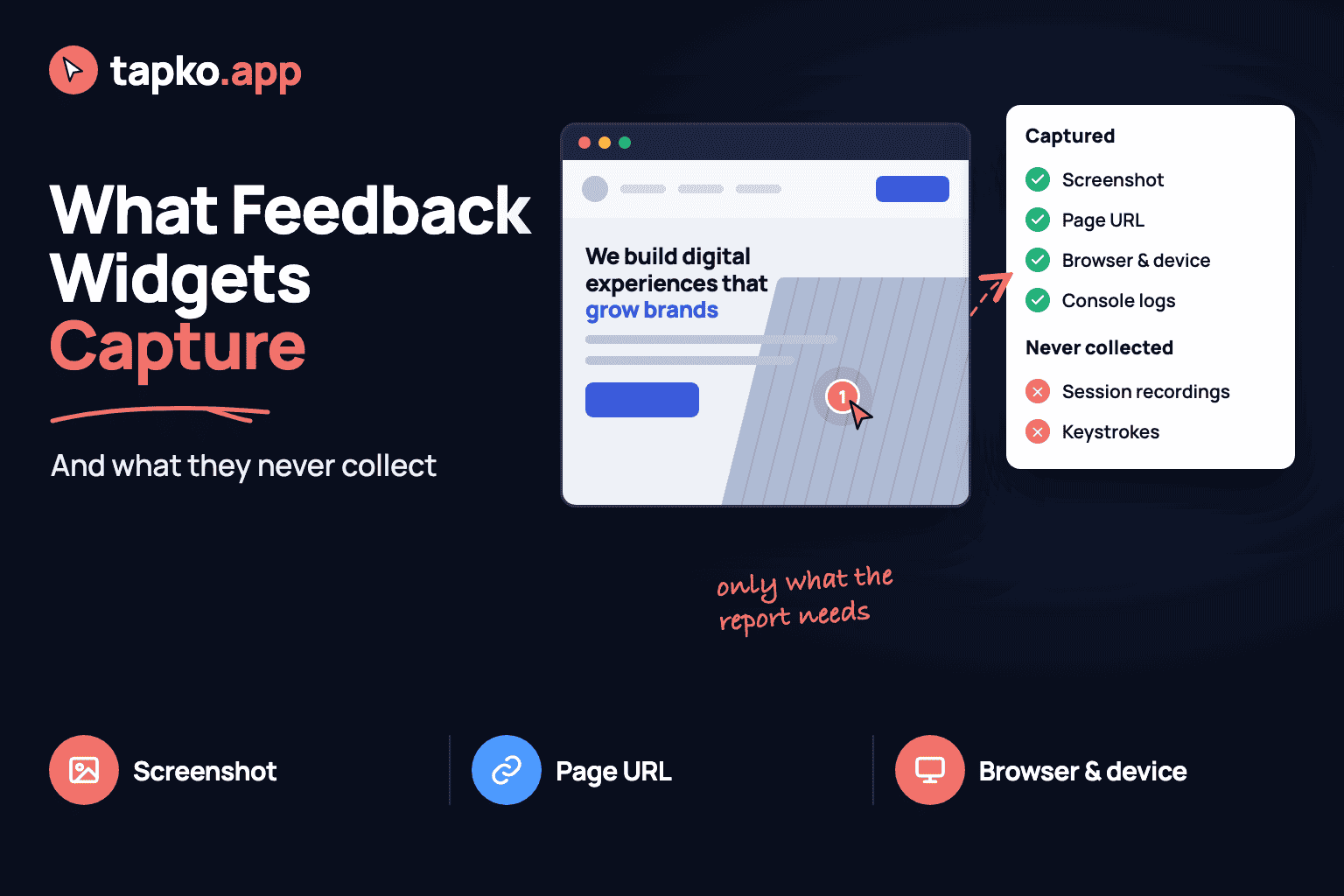
Screenshot, page URL, browser and device, and nothing else. A plain accounting of what a visual feedback widget records, and what it was never built to see.
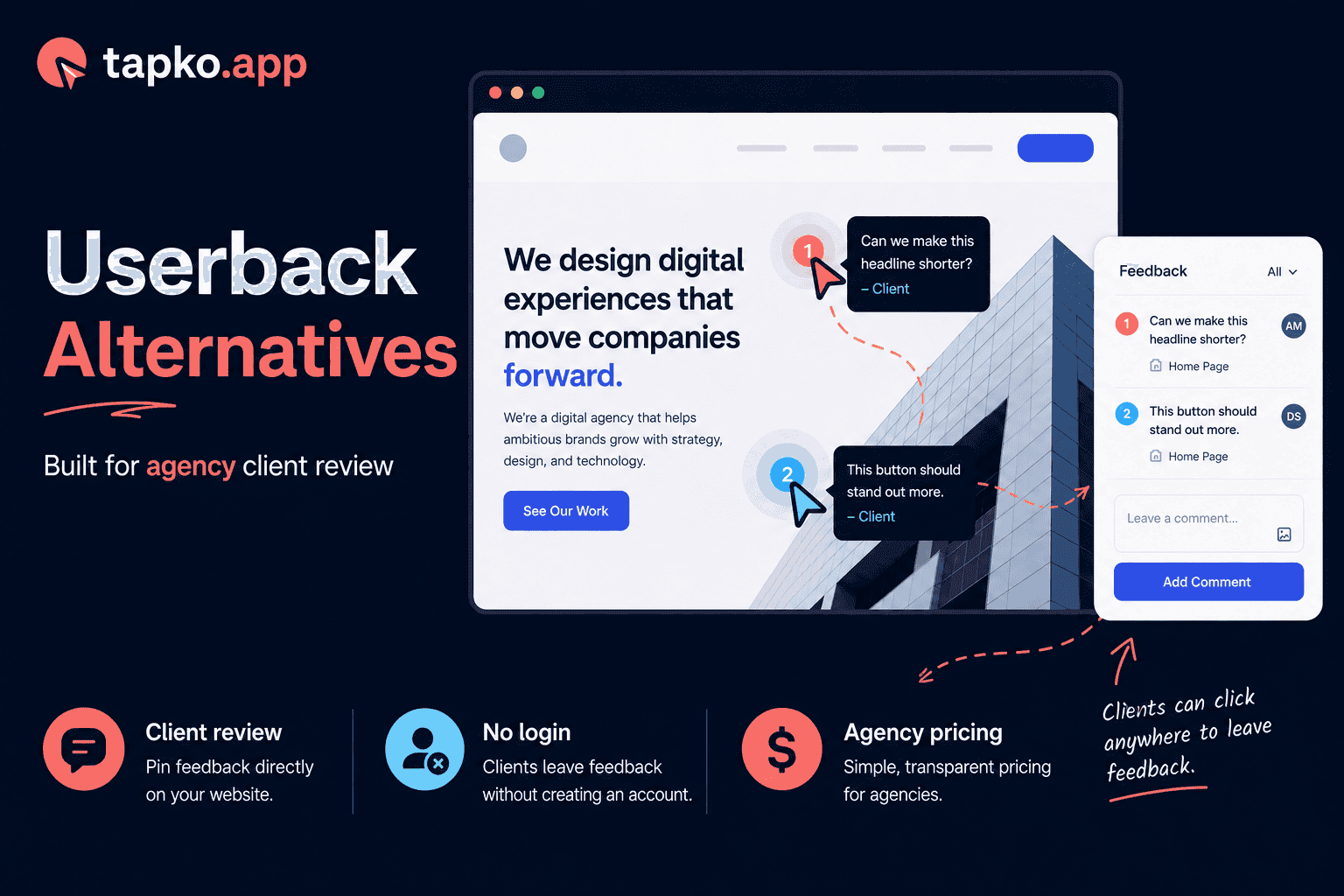
Userback is strong on session replay and in-app product feedback for SaaS teams — but agencies with non-technical clients usually need something lighter, and here's who fills that gap.
SureFeedback (formerly ProjectHuddle) is a strong WordPress feedback plugin — here's how it compares to tapko.app and five other tools for agencies running mixed-stack client sites.
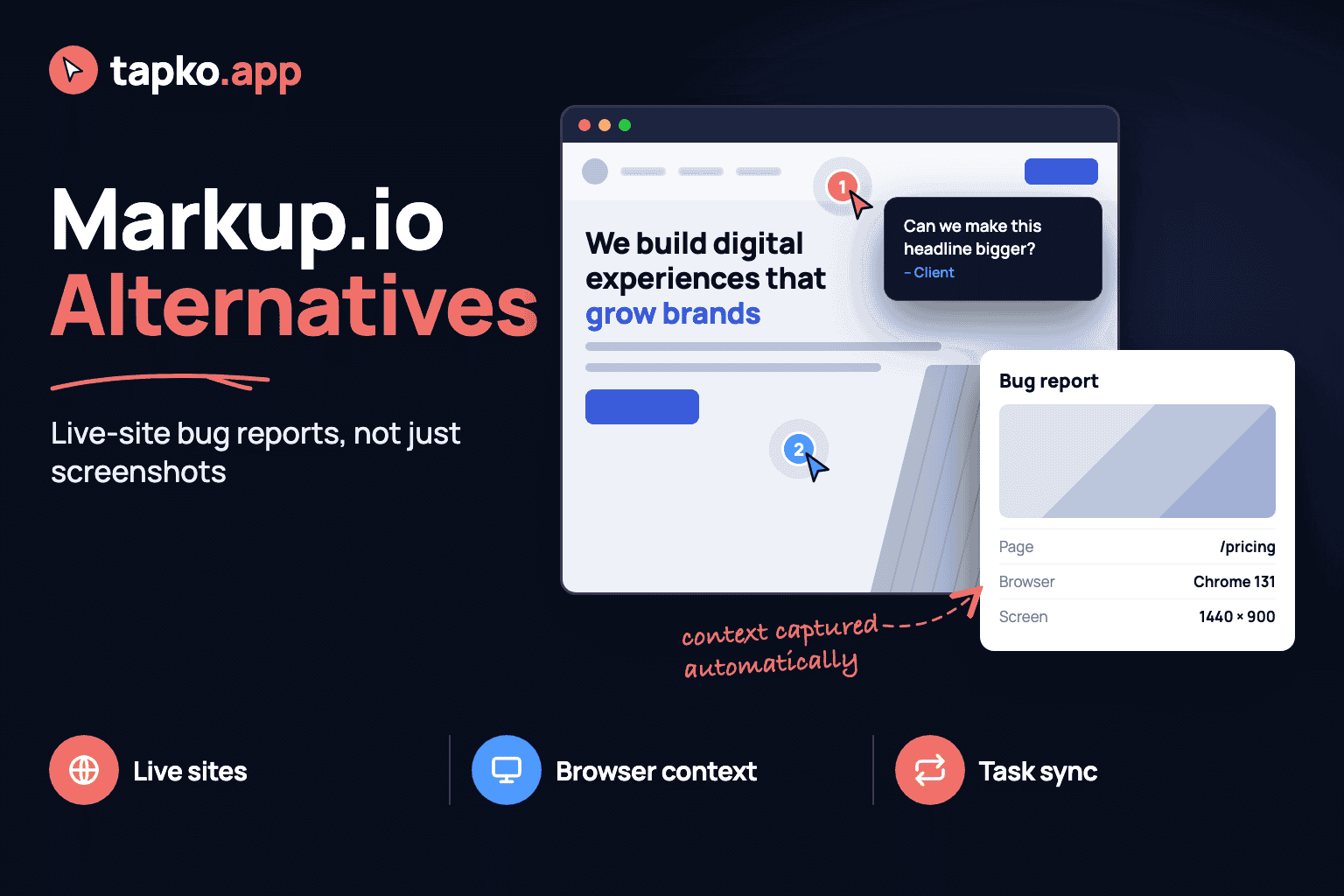
Markup.io is great for annotating screenshots and static assets, but agencies need clients to click directly on a live page and have that feedback land straight in their project tool.
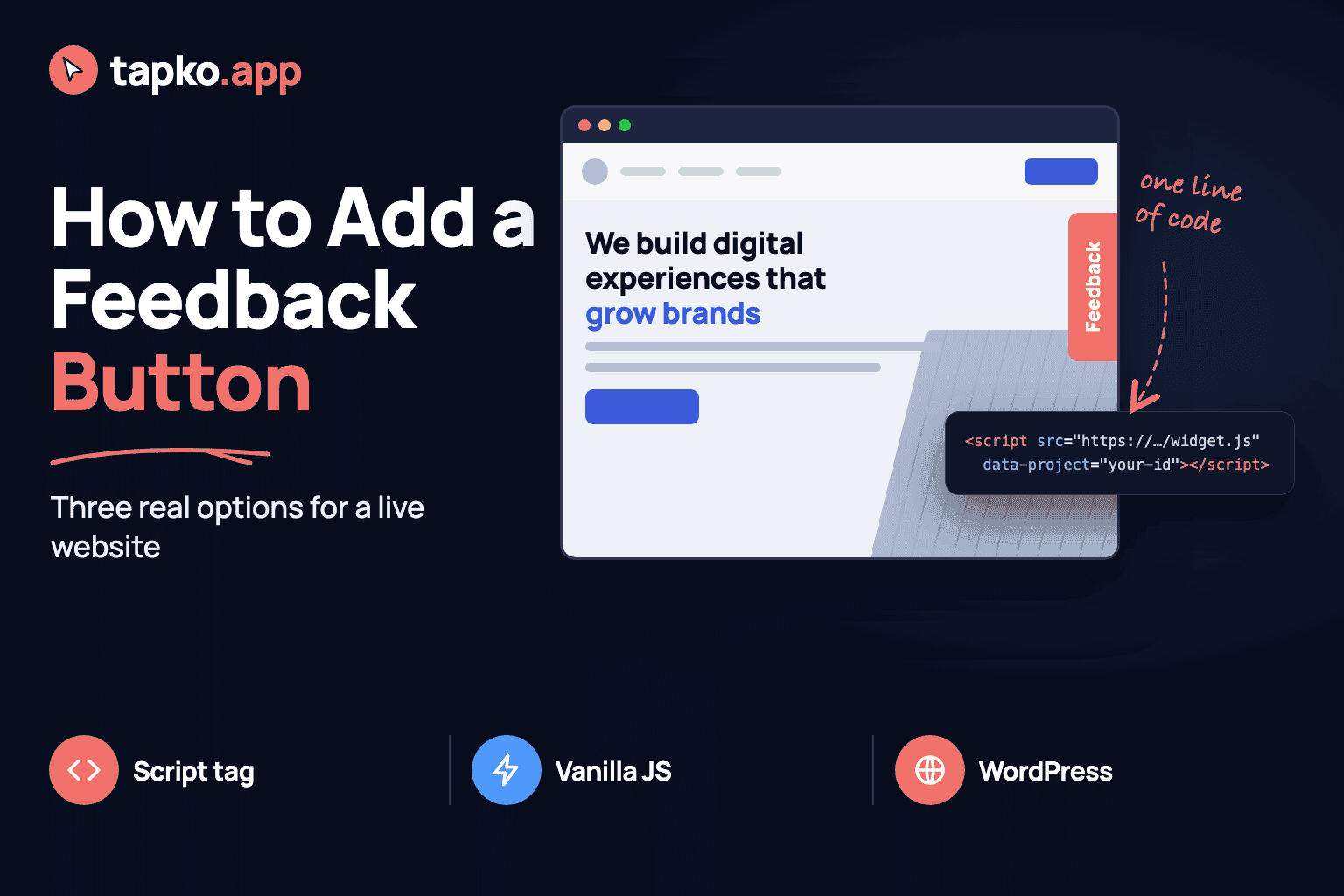
A practical walkthrough of the three real ways to add a feedback button to a live website — a one-line hosted script tag, building one yourself, and WordPress/no-code notes.
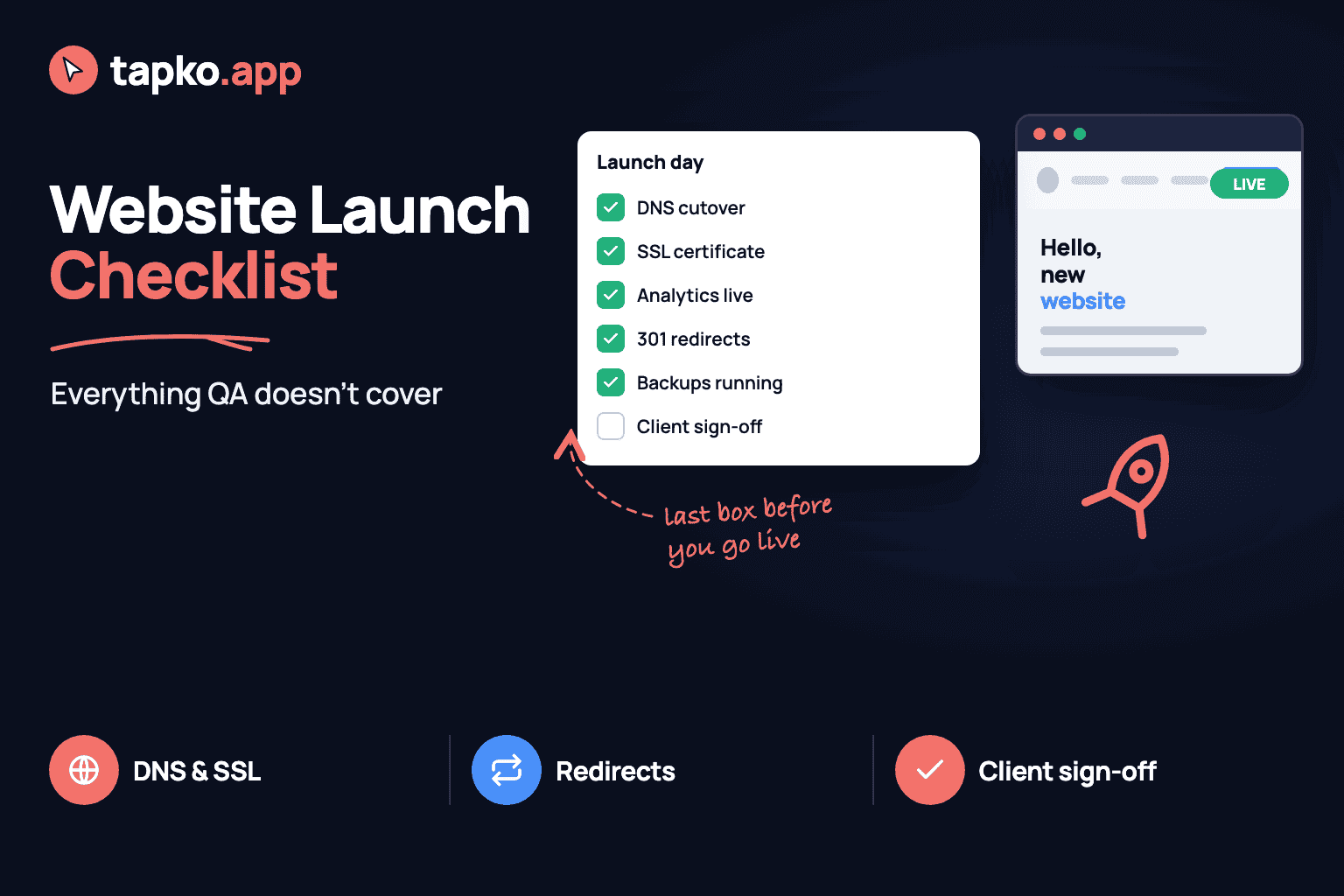
A copy-paste launch-day checklist for DNS cutover, SSL, redirects, analytics, legal pages, backups, and the final client sign-off — the companion to the QA testing checklist.
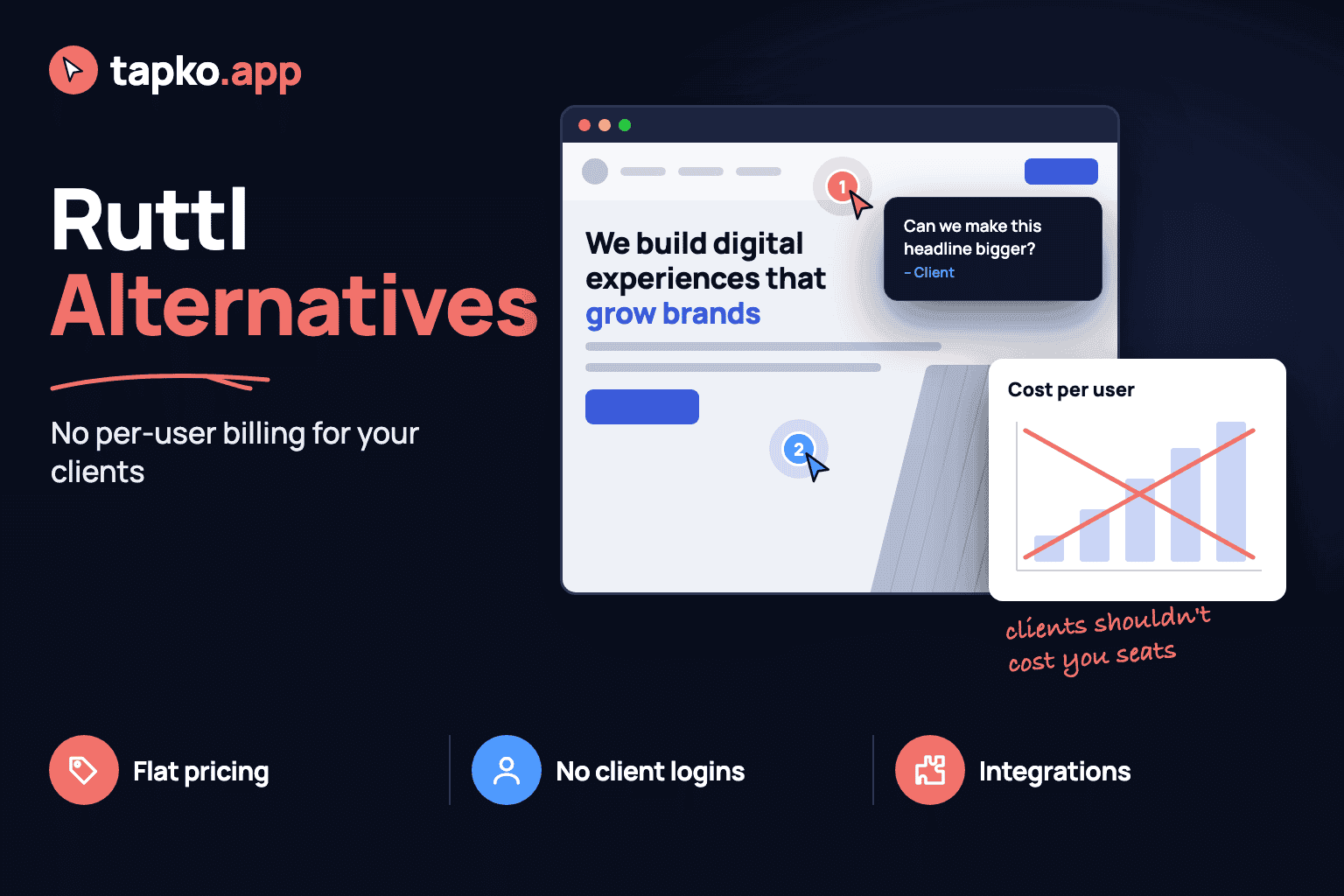
Ruttl charges per user and spans images/PDFs/mobile — here's how it and five other tools stack up against tapko.app for agencies running live-site feedback with non-technical clients.
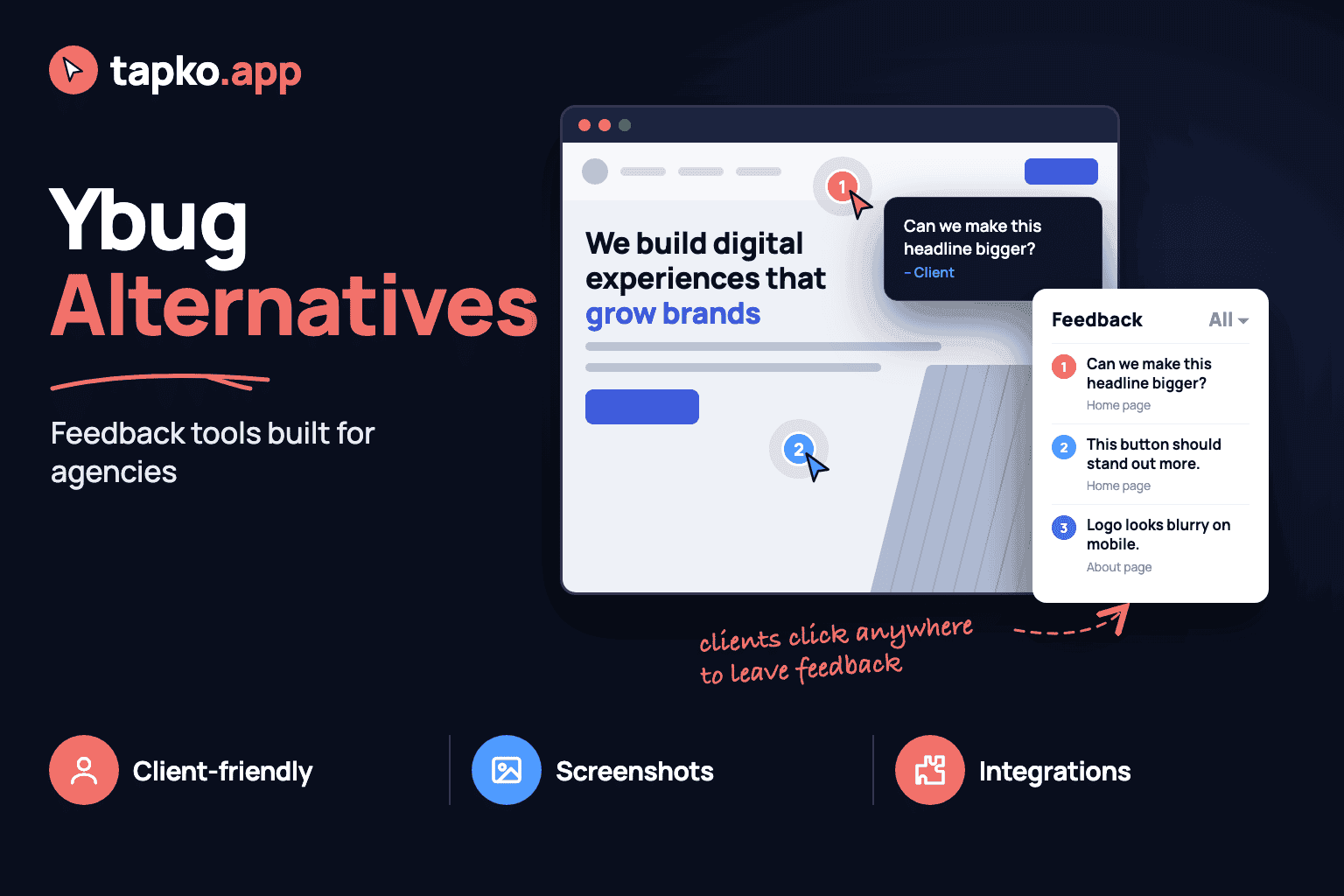
Ybug skips client accounts, but your site still needs the widget installed first — here's what to use instead when your clients aren't technical.
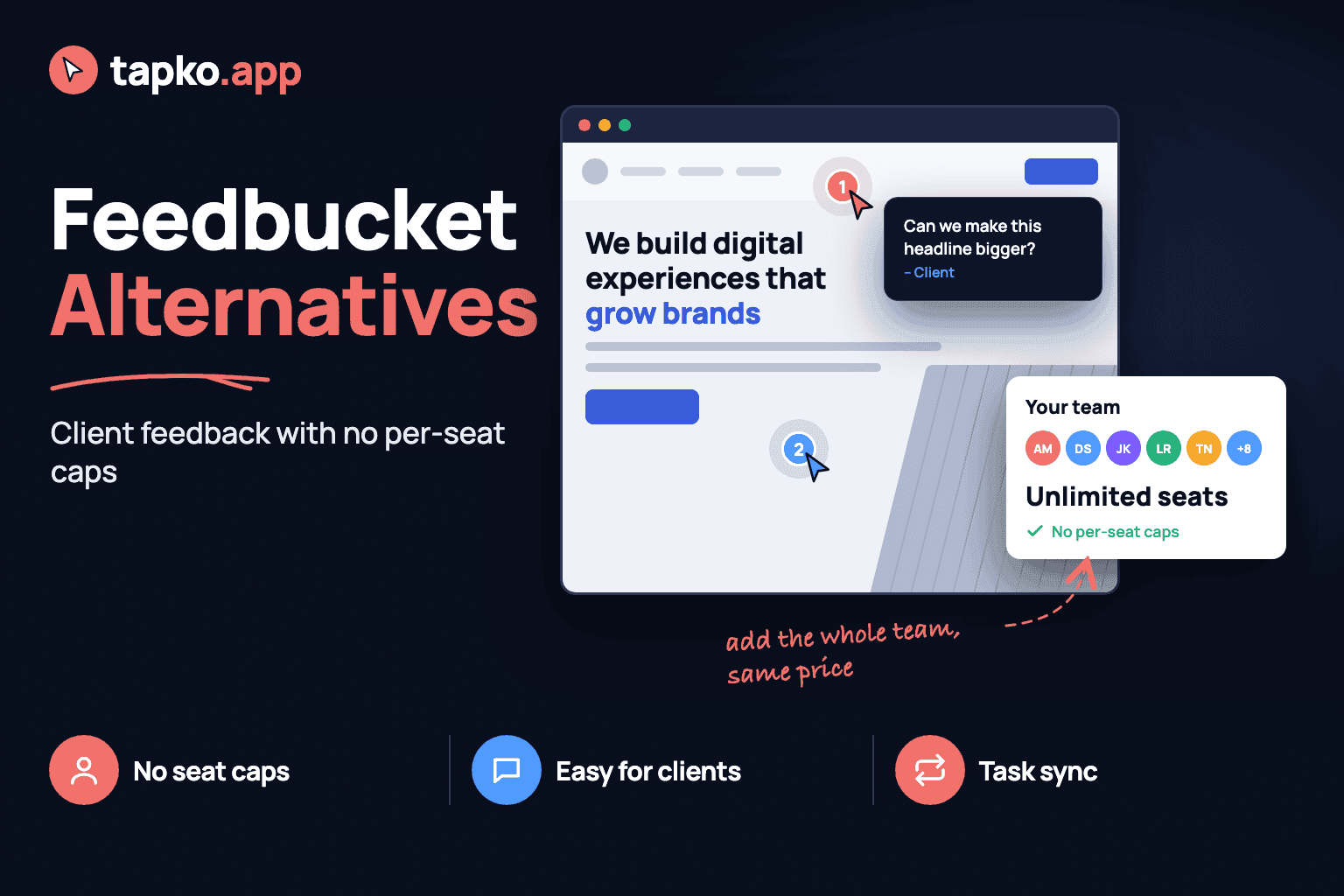
Feedbucket caps teams at 2 members on its $49/month plan — here's how it and five other tools compare to an unlimited-seat alternative.
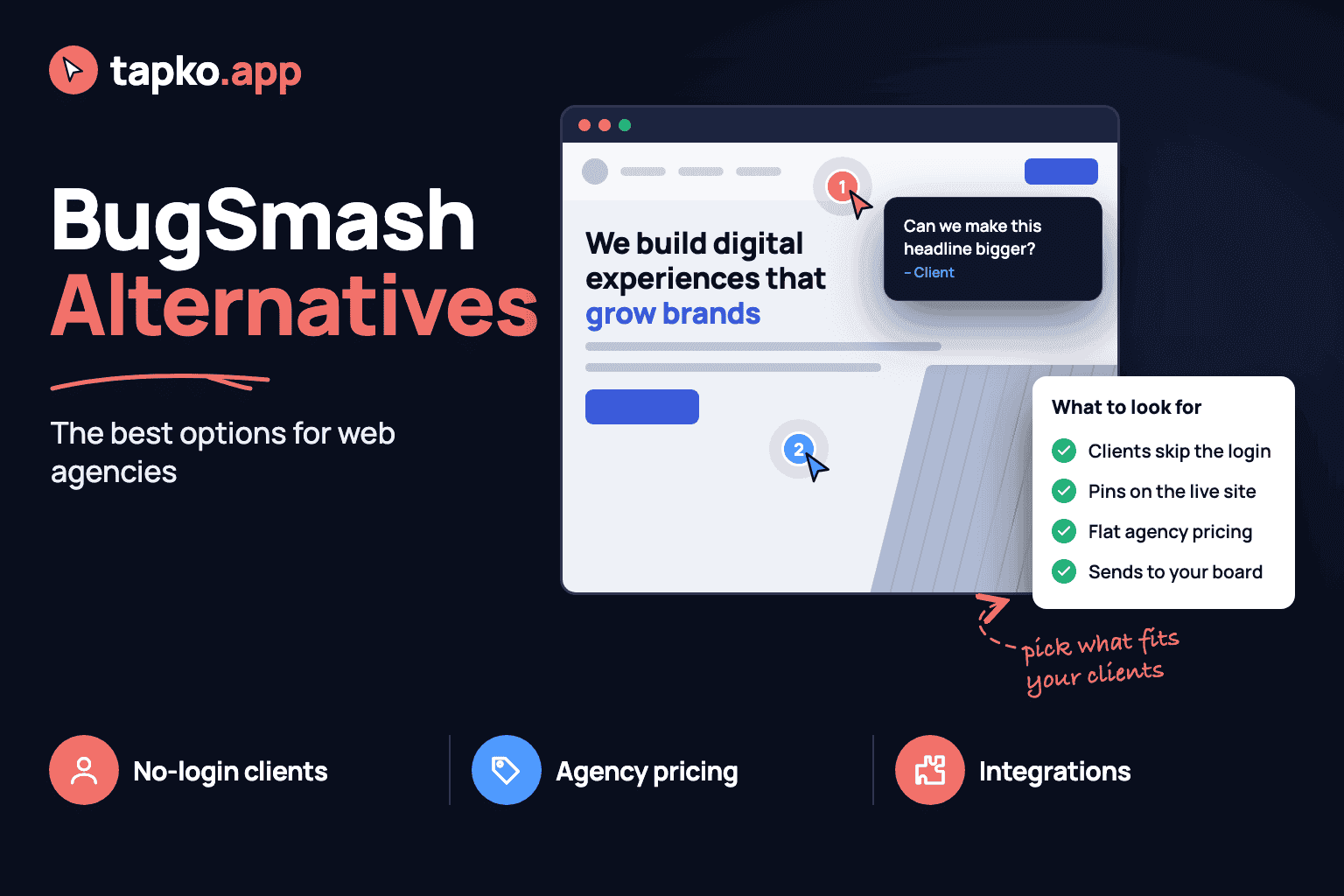
BugSmash is a lightweight tool for small teams, but its per-user caps and seat fees add up — here's how tapko.app and five other alternatives compare for agencies.
Huddlekit caps team members even after it uncaps projects — here's how tapko.app and five other tools compare on pricing, setup, and stack flexibility.
Volley's feedback flow has historically run through a Chrome extension — here's an honest look at tapko.app and five other alternatives for agencies with non-technical clients.
An honest, feature-by-feature breakdown of Usersnap vs BugHerd — pricing, client UX, integrations, and who each tool is actually built for.
Userback and Usersnap both show up in feedback-tool searches — here's what each is actually built for, and where they differ on pricing and client-facing UX.
Marker.io and BugHerd both track website bugs — here's how their pricing, client UX, and integrations actually compare.
A head-to-head on Markup.io's file/screenshot review vs Marker.io's live-site bug reporting — plus where a lighter, client-facing tool fits in.
BugHerd and Userback look similar on the surface but solve different problems — here's an honest, feature-by-feature breakdown to help you pick the right one.