
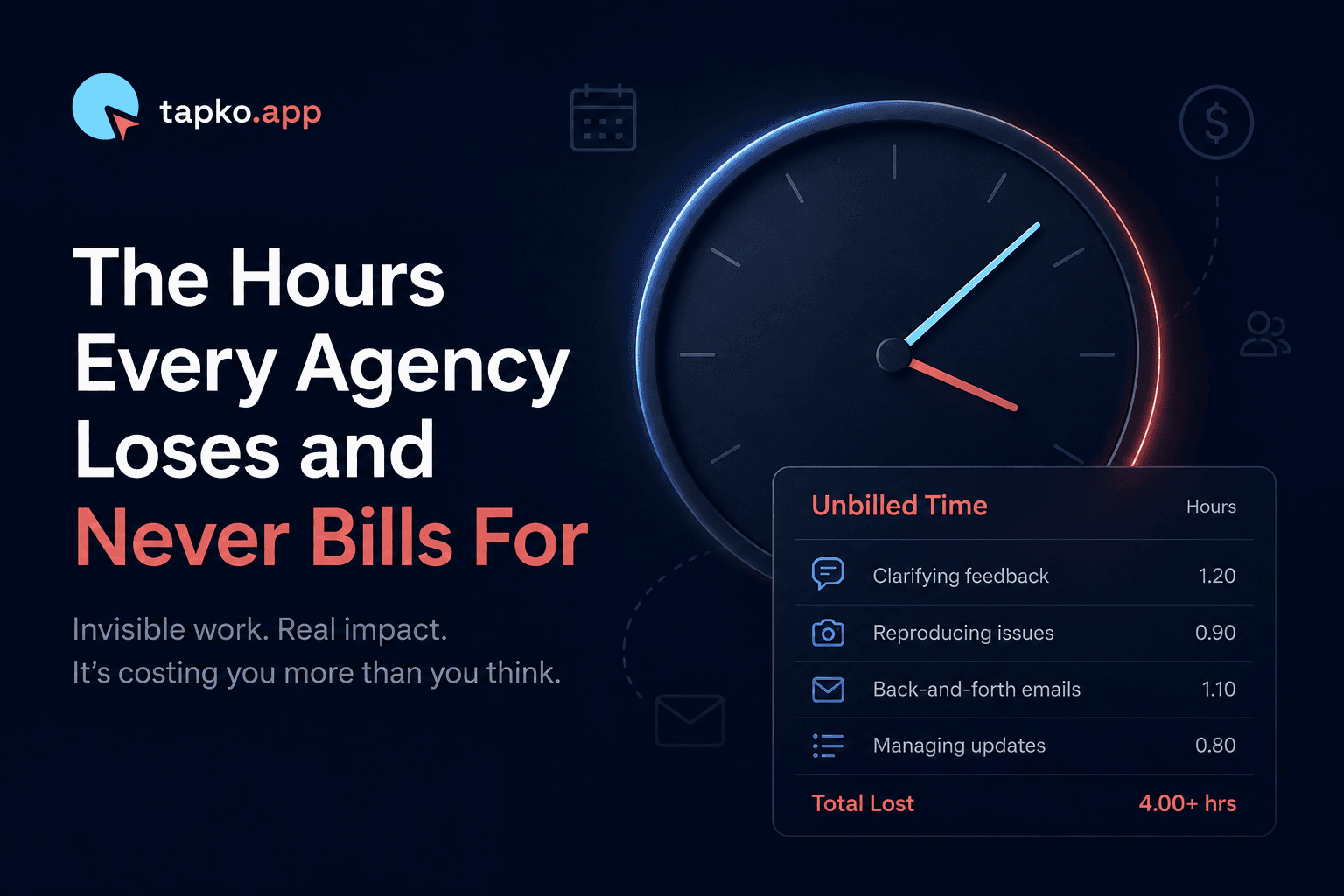
Every agency has had this week: everyone's head-down, Slack is loud, nobody had a spare minute — and then the utilization report comes in lower than the week felt. Not dramatically lower. Just enough to be confusing. The hours don't match the exhaustion.
The instinct is to assume the tracking is wrong, or that someone forgot to log time. Usually neither is true. The hours are real. They're just not the kind utilization tracking was built to see.
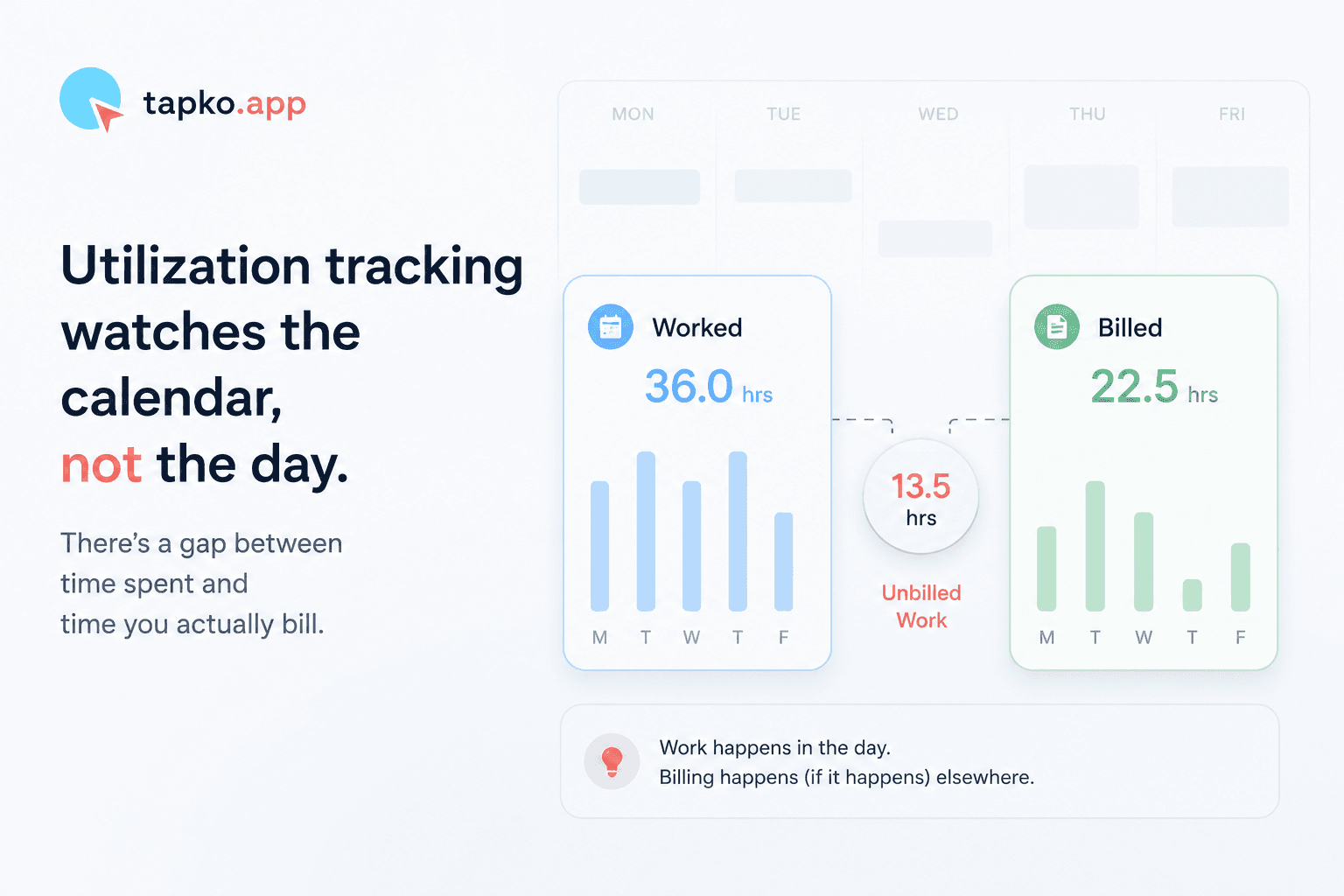
Utilization tracking watches the calendar, not the day
Time tracking is built around scheduled work: the project you clocked into, the task you logged against. It's a clean system for the hours that fit neatly into a block labeled with a client name.
It's blind to everything that happens between those blocks. That's where the missing hours are — not hidden in some unlogged task, but in the seams between the tasks that did get logged. Nobody puts “figuring out where the last person left off” on a timesheet, so it doesn't show up anywhere, even though it happened, took real time, and left everyone a little more tired at the end of the day.
Every handoff has a reorientation cost, and nobody logs it
A project rarely stays with one person start to finish. It passes from strategist to designer to copywriter to account lead, and each time it changes hands, the person picking it up has to reconstruct context before they can do anything productive with it — what was decided, what was tried, what the client actually meant in that one ambiguous Slack message from three weeks ago.
That reconstruction is real work. It's just invisible work, because there's no line item for “figuring out where this stands.” It gets absorbed into whatever task comes next, uncounted.
Context-switching charges a re-entry fee, every single time
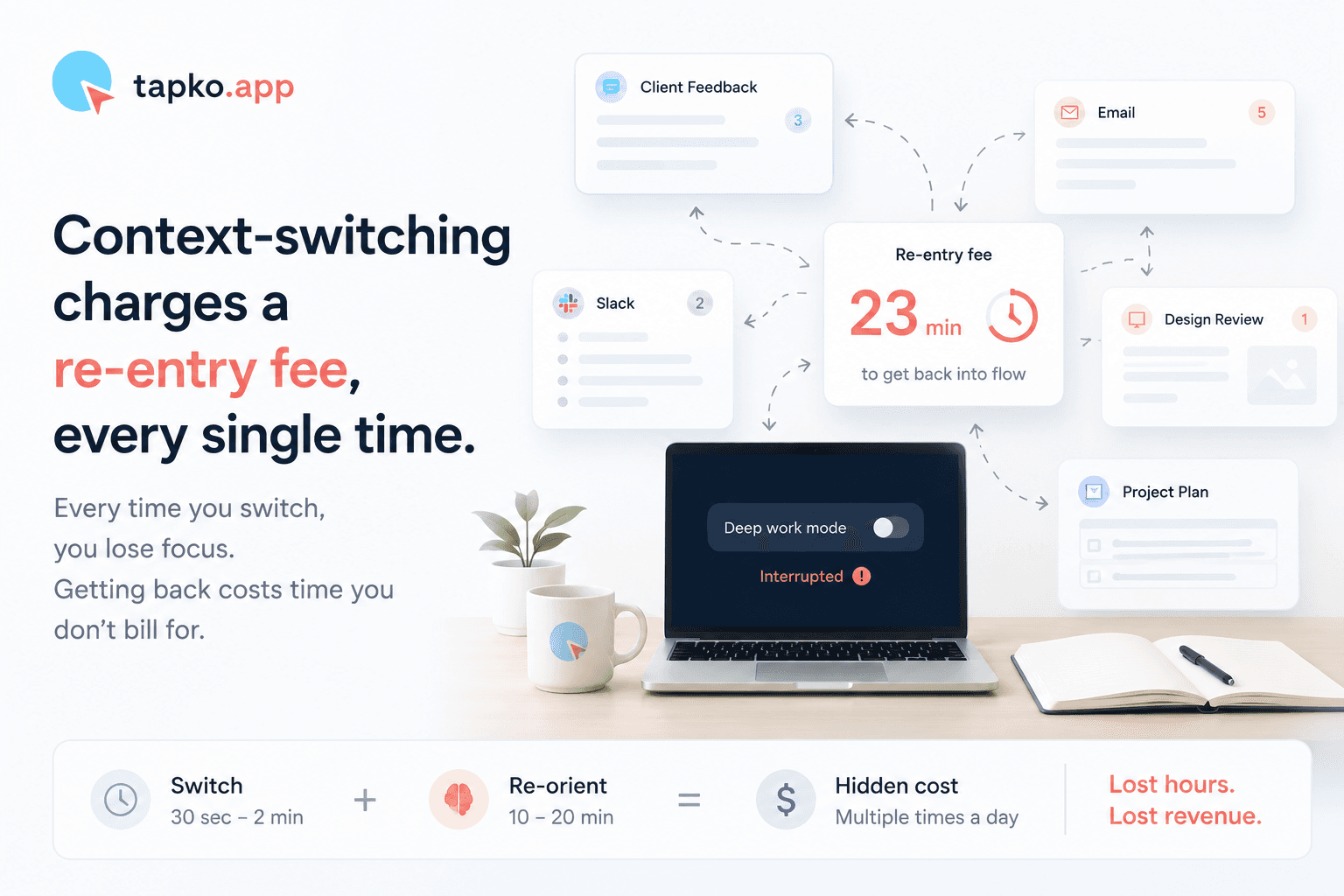
Almost nobody works one project a day anymore. A typical day moves across three, four, five active accounts, and each jump back into a project isn't free — there's a re-entry cost every time: reloading where things stand, what's due, what the last exchange with the client was about.
That cost doesn't show up on a timesheet either, because it's not a task — it's the tax paid before the task. Multiply it by however many times a day someone context-switches, and it adds up to something substantial that no report captures.
Where handoffs cost the most
Any point where a project changes hands without a written record of where it stands — the next person pays for that gap in time, not dollars.
Where switching costs the most
The first few minutes back on any project, every time — reloading status, not doing the work itself.
Map a day minute-by-minute, and the gap gets hard to ignore
No invented number here — just an observation that tends to hold: teams that actually map out a day minute-by-minute, rather than relying on end-of-week timesheets, usually find the gap between hours worked and hours billed is bigger than anyone assumed going in. And it's not because anyone was slacking off. It's because the day was full of friction that never had anywhere to be recorded.
Hours aren't lost to distraction. They're lost to the seams between work.
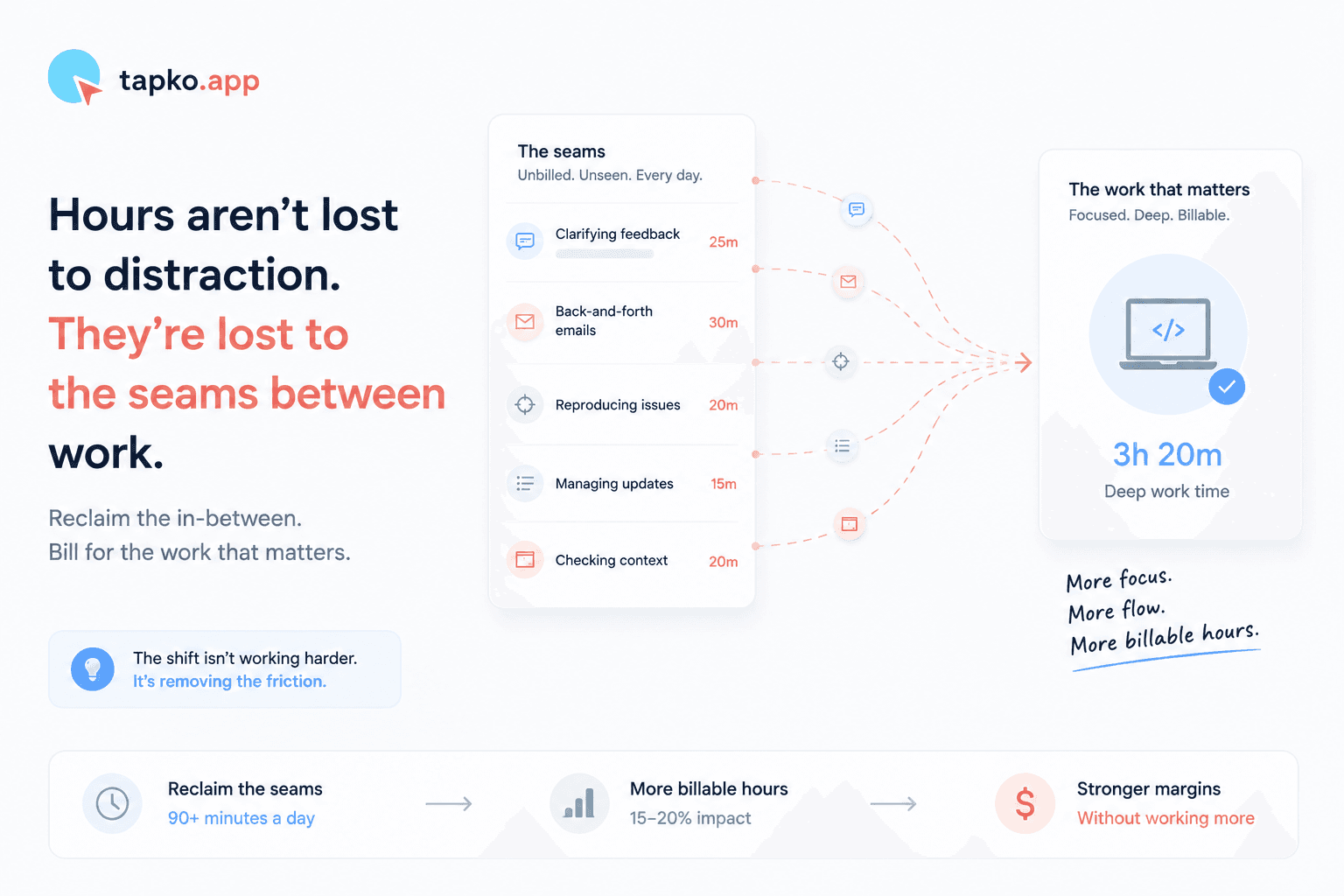
The easy explanation for a utilization gap is that people are slower than they should be, or distracted, or not focused enough. That explanation is usually wrong, or at least incomplete. The hours are going somewhere specific: into handoffs, into re-entry, into the friction of moving between things — not into idle time.
That's a different problem than a discipline problem, and it needs a different fix. You can't coach someone out of a cost that's structural to how the work moves through the team.
If you tracked every handoff and re-entry this week, would the number surprise you? Most teams have never actually measured it — not because it's hard to notice, but because there's never been a column for it. The seams between work are where the hours go. Whether that number is small or large, it's worth finding out before assuming the answer is more discipline instead of less friction.
Frequently Asked Questions
Why does utilization tracking miss so many real hours?
Utilization tracking is built around scheduled work logged against a client or task. It is blind to everything that happens between those blocks, like handoffs and re-entry after a context switch, because nobody puts that time on a timesheet.
What is a handoff reorientation cost?
It is the time the next person on a project spends reconstructing context after work changes hands — what was decided, what was tried, and what the client meant. That reconstruction is real work, but it has no line item, so it gets absorbed into whatever task comes next.
What is the re-entry cost of context-switching?
It is the time spent reloading where a project stands every time someone switches back to it after working on something else — what is due, what the last client exchange covered. Multiplied across several projects a day, it adds up to hours no report captures.
How can an agency find its hidden lost hours?
Map a day minute-by-minute instead of relying on end-of-week timesheets. Teams that do this typically find the gap between hours worked and hours billed is larger than assumed, and the cause is friction between tasks, not slacking.